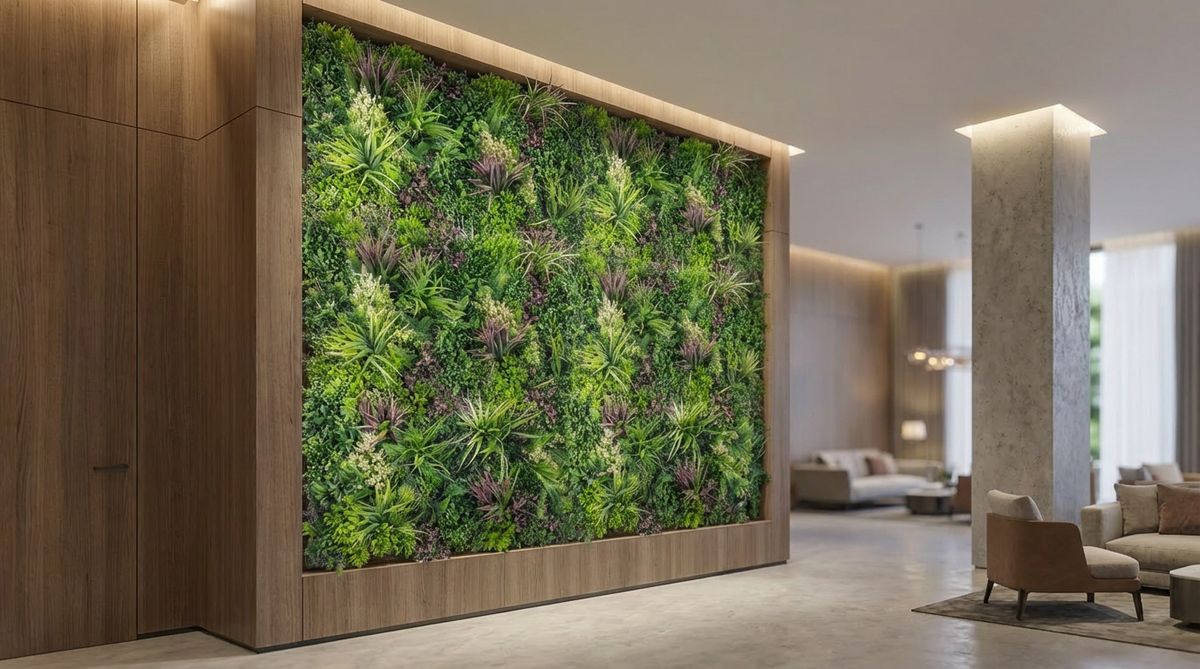
A living wall—sometimes called a green wall or vertical garden—is one of those ideas that sounds perfect until you try to keep it alive in Texas. Real planted walls are beautiful when everything is working: the irrigation, the light levels, the temperature, the pest control. But the moment any one of those systems slips, you're staring at brown patches and a maintenance bill.
That's the practical reason artificial living walls have gained traction in Texas, both in homes and commercial spaces. The technology behind the panels has gotten genuinely good—mixed foliage types, realistic textures, and UV-stable materials that can handle sun exposure. This guide covers what you need to know before investing in one, whether it's for a backyard patio, a restaurant, or a corporate lobby.
Planning a similar project? See artificial living wall installs →.
For related reading, we've published deeper articles on specific angles: artificial living walls for Texas summers, artificial vs. real living walls for Texas homes, and faux living walls in Texas office spaces.
What makes a living wall different from a hedge panel
An artificial hedge is typically a single type of foliage—dense boxwood, for example—arranged into uniform panels. It's clean, structured, and works well for privacy screening.
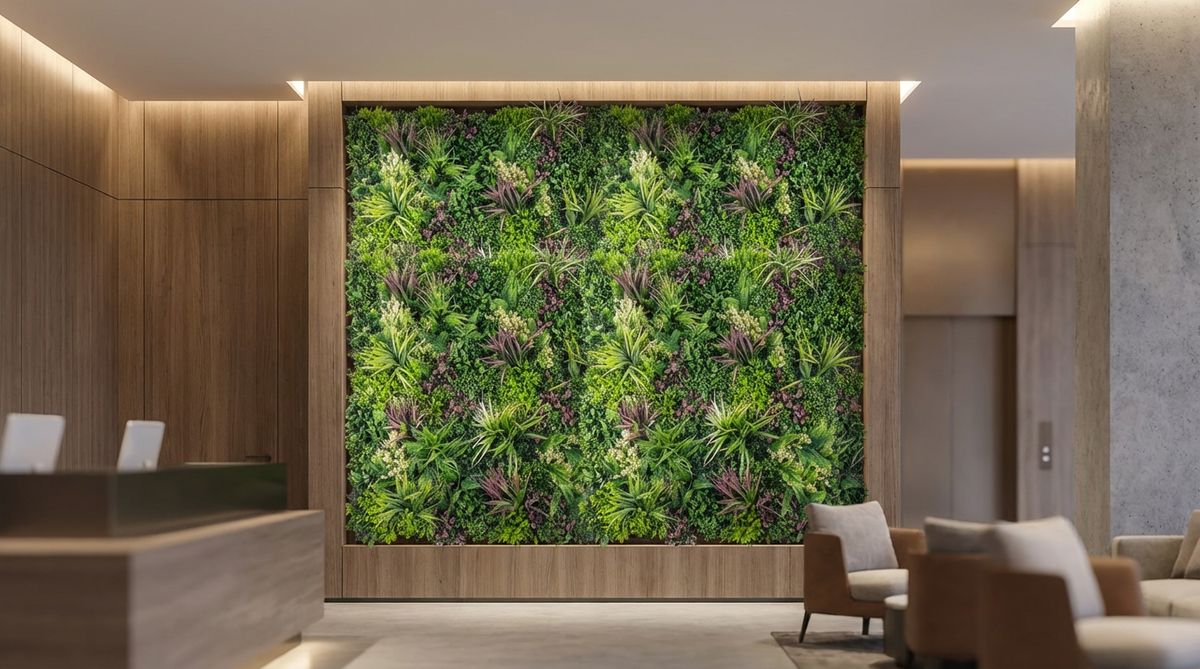
An artificial living wall is different in intent. It's designed to look like a vertical garden: multiple types of foliage layered together—ferns, grasses, trailing vines, mosses, small flowering plants—arranged to create depth and visual complexity. The goal is a naturalistic, "planted" look rather than a trimmed hedge look.
This distinction matters because it affects where each product works best. Hedge panels are ideal for fences, privacy barriers, and toppers. Living walls are the better choice for feature walls, restaurant backdrops, lobby installations, pool surrounds, and any application where you want the visual richness of a planted garden without the irrigation system behind it.
Materials and construction
Planning a similar project?
Use these next pages while you read
They cover pricing, service details, and the next planning step without making you leave the article blind.
The best artificial living wall panels share several characteristics:
Polyethylene (PE) foliage. PE is the standard material for outdoor-rated artificial plants. It holds color better than PVC under UV exposure, resists brittleness in heat, and feels more realistic to the touch. Some panels use a blend of PE and other polymers for different leaf types within the same panel.
UV stabilization. Just like with hedge panels, UV inhibitors are critical for any outdoor application in Texas. Indoor installations can use materials without UV treatment, but outdoor panels without it will fade and deteriorate quickly.
Varied foliage density. Quality panels aren't uniformly packed. They mix denser foliage areas with open spots and use leaves of different sizes and colors to mimic how plants actually grow. Some manufacturers place different foliage types at different depths to create a layered, three-dimensional look.
Sturdy backing grid. The backing is what takes the structural load. Look for rigid or semi-rigid backing that offers plenty of attachment points for fasteners. Flimsy backing grids flex in wind, sag over time, or make panel alignment difficult during installation.
Interlocking edges. Panels that interlock at their edges create seamless transitions. Without this, you end up with visible grid lines where panels meet, which breaks the illusion.
Where artificial living walls work best in Texas
Residential applications
In Texas homes, artificial living walls tend to land in a few predictable spots:
Backyard privacy walls and patio backdrops. A living wall behind an outdoor seating area or kitchen creates a lush backdrop that doesn't need irrigation. It softens hardscape (stone, concrete, stucco) and looks finished immediately—no waiting for vines to grow in.
Pool surrounds. The pool area is tough on real plants: reflected UV from the water, chlorine mist, and splashing. Outdoor-rated artificial living walls can be a strong fit there without dropping leaves into the pool or attracting insects.
Utility and equipment screening. Pool pumps, AC units, gas meters—anything you'd rather not see. A living wall panel can screen the view while still allowing airflow if mounted on a frame with clearance.
For a deeper comparison of artificial vs. real options for homes, see our artificial vs. real living walls for Texas homes.
Commercial and hospitality
Commercial living walls have different requirements than residential ones—they need to hold up under heavier traffic, harsher cleaning, and fire code scrutiny.
Restaurant and bar patios. An artificial living wall behind outdoor seating creates the kind of backdrop that photographs well and makes a space feel more enclosed and intimate. In Texas, where outdoor dining runs 8+ months a year, these walls earn their keep.
Hotel lobbies and common areas. Living walls in hospitality settings need to look good at close range, handle cleaning schedules, and meet fire codes for interior installations. Density and realism are paramount here—guests are often standing right next to the wall.
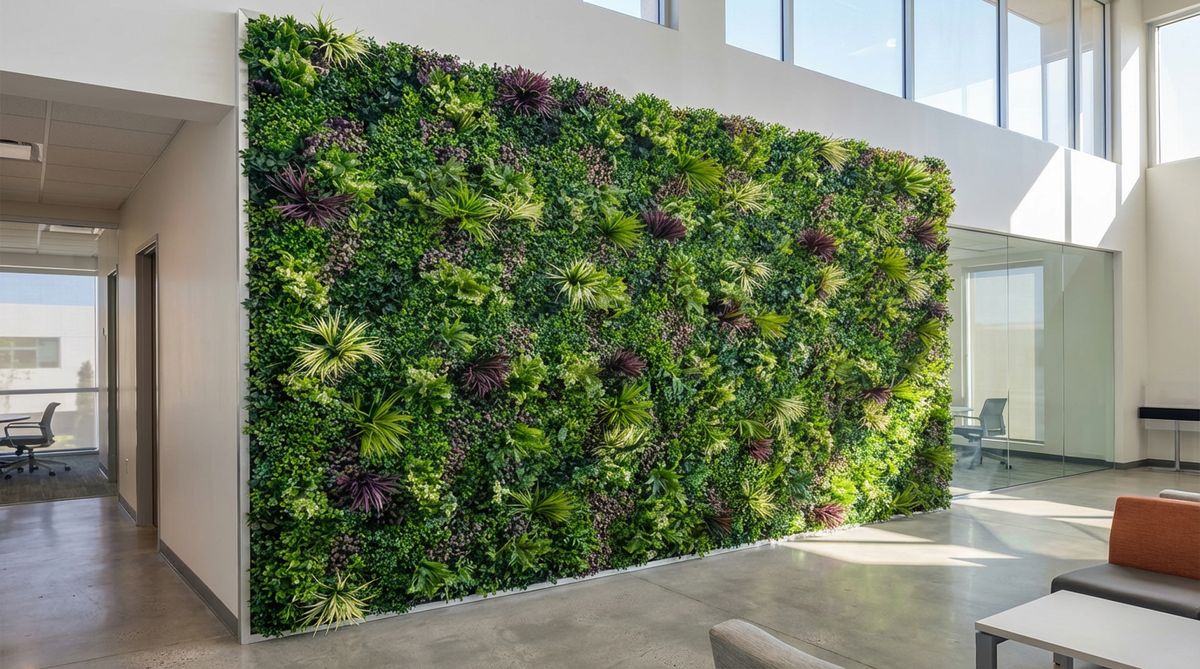
Office lobbies and coworking spaces. Biophilic design—incorporating natural elements into built environments—has become a standard feature in commercial real estate. An artificial living wall delivers the look without the maintenance burden that live planted walls impose on facilities teams. We go deeper into commercial applications in our article on faux living walls in Texas office spaces.
Retail and event spaces. Living walls serve as backdrops for photo opportunities, branded displays, and visual merchandising. The advantage over live plants in these settings is consistency—the wall looks the same for every customer, every day.
For commercial projects, fire-rated options may be required. We cover that topic in depth in our fire-rated artificial greenery guide for commercial properties.
How Texas climate affects outdoor living walls
If you've read our guide on artificial living walls for Texas summers, you know the details. Here's the summary:
UV is the primary enemy. Direct sun—especially afternoon sun on south- and west-facing walls—is the harshest condition an artificial living wall will face in Texas. UV-stabilized panels are a requirement, not an option, for any outdoor installation.
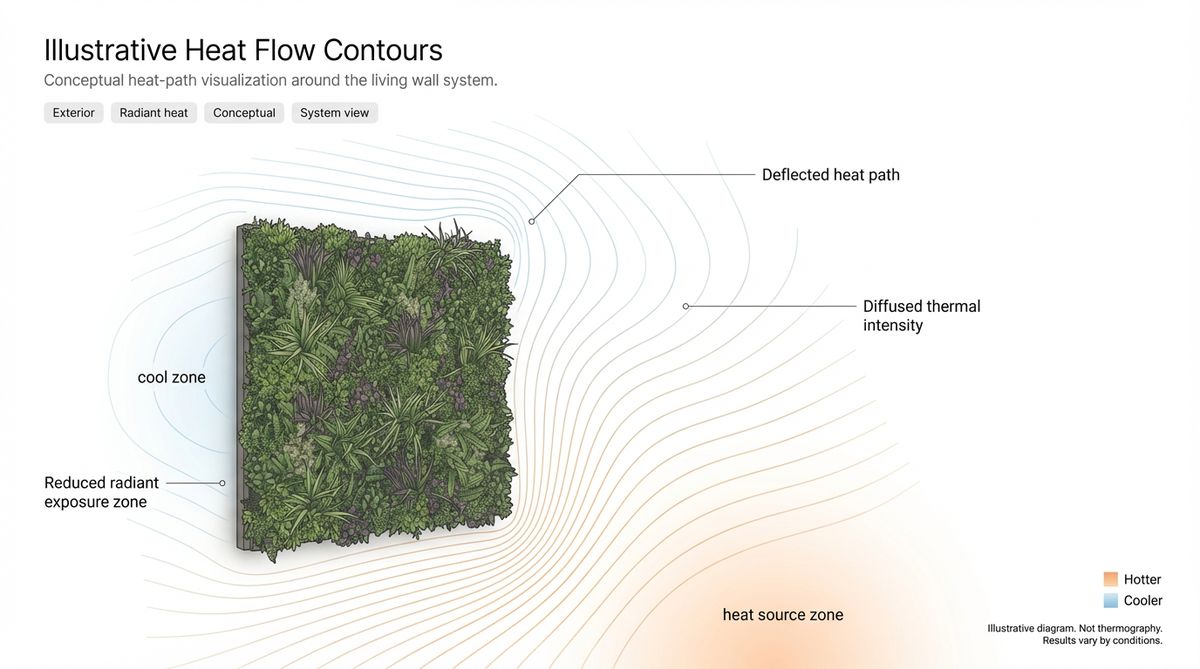
Wall orientation matters. North-facing walls and shaded courtyards are the easiest placements. East-facing walls get softer morning light and do well. West-facing walls are the hardest—they get hot afternoon sun plus radiated heat from the wall surface itself. If you're stuck with a west-facing wall, plan for the best UV-rated panels available, heat-rated fasteners, and an air gap behind the panels.
Heat buildup behind panels. A living wall mounted flush to a hot masonry or stucco wall can trap heat in the gap, accelerating material stress. A small air gap—even half an inch created by a mounting grid or furring strips—lets heat and moisture escape. This simple detail extends the life of the installation.
Dust and pollen. Central Texas cedar pollen, road dust, and construction debris all settle on outdoor walls. A periodic hose rinse keeps the foliage looking fresh. Near pools, sunscreen and chlorine mist add to the film. Mild soap and water handles heavier buildup.
Indoor vs. outdoor: what's different
The material requirements change depending on whether the wall is inside or outside.
Outdoor walls need UV-stabilized foliage, weather-rated fasteners, and mounting systems that account for wind, heat expansion, and moisture. The installation is more involved, and the materials cost more because of the UV treatment.
Indoor walls don't need UV stabilization (unless they're near large windows with direct sun exposure). They can use a wider range of materials, including silk blends and softer polymers that feel more realistic but wouldn't survive outdoors. Indoor installations are also lighter and easier to mount because wind load isn't a factor.
The main indoor considerations are:
- Fire compliance. For commercial interiors—offices, hotels, restaurants, retail—fire code requirements may apply to wall coverings and decorative materials. Products tested to NFPA 701 (a National Fire Protection Association standard for flame propagation) are commonly specified. Requirements vary by jurisdiction and building type, so verify with your local code official or fire marshal.
- Lighting. Indoor artificial walls are heavily affected by lighting. Warm LED uplighting or wall washing makes foliage look dimensional and realistic. Cool fluorescent overhead light can flatten the colors and make everything look obviously synthetic. Plan the lighting before the wall.
- Cleaning access. Indoor walls collect dust, and in restaurants they collect grease and cooking residue. Make sure the installation allows for routine cleaning without disassembling panels.
Installation considerations
Mounting approaches
Direct to wall. Panels mount to drywall, concrete, masonry, or stucco using furring strips, a mounting grid, or individual brackets. A grid system gives you a flat, consistent plane and creates the air gap that helps with heat behind outdoor installations.
Frame-mounted. A freestanding or wall-attached frame (usually aluminum or steel) provides the mounting surface. This is common for commercial applications, room dividers, and installations where the wall surface isn't suitable for direct mounting.
Fence-attached. For outdoor residential installations on existing fences, panels can attach with UV-rated zip ties, clips, or screws. This works on wood, metal, and vinyl fencing.
What to get right
- Start with a flat, stable surface. If the wall or fence is warped, cracked, or unstable, the living wall will mirror those imperfections.
- Use outdoor-rated hardware. Stainless steel or coated fasteners resist corrosion. Cheap hardware rusts quickly in Texas heat and humidity—especially near the coast.
- Allow for thermal expansion. Leave small gaps at panel edges for movement. Panels that are jammed together tightly can buckle when they expand in heat.
- Panel alignment. Interlocking edges need to be fitted carefully so seams disappear. Sloppy alignment is the easiest way to spot a cheap installation.
- Plan for servicing. If the wall covers electrical panels, hose bibs, or access points, build in removable sections or access doors.
Maintenance
Artificial living walls are genuinely low-maintenance, but not zero-maintenance.
Outdoors:
- Rinse with a garden hose periodically to remove dust and pollen. In Central Texas, every 2–3 months is a reasonable schedule. Near pools or roads, more often.
- Use mild soap and water for heavier buildup—pool chemicals, sunscreen, grill grease.
- Inspect fasteners and connections annually. Texas heat and UV can degrade some zip ties and adhesives over time.
- Avoid pressure washers and harsh chemicals. They can damage foliage texture and strip UV coatings.
Indoors:
- Dust with compressed air or a soft microfiber cloth monthly or as needed.
- For deeper cleaning, a damp cloth with mild soap works.
- In restaurants and kitchens, grease buildup may require more frequent cleaning—test cleaning products on a small area first.
Related guides and product pages
If you want to go deeper on a specific topic, we've covered these in detail:
- Artificial living walls for Texas summers: what holds up when it's 105°F — Materials, mounting, and cleaning for outdoor heat
- Artificial vs. real living walls for Texas homes — Side-by-side comparison for homeowners
- Faux living walls transforming Texas office spaces — Commercial design and fire code considerations
Product pages:
We install living walls in every major Texas metro. See local pages for Dallas, Houston, San Antonio, and Sugar Land.
FAQ
What is the difference between an artificial hedge and an artificial living wall?
An artificial hedge typically uses a single type of foliage (like boxwood) to create a dense, uniform screen. A living wall uses a mix of foliage types—ferns, grasses, succulents, mosses, trailing vines—arranged to look like a vertical garden. Both are synthetic, but living walls aim for a more layered, naturalistic look.
Can artificial living walls go outdoors in Texas?
Yes, as long as the panels are UV-stabilized for outdoor use. West-facing walls in direct afternoon sun get the most stress. Use panels rated for outdoor exposure, mount with a small air gap behind them, and choose heat-rated fasteners.
Do artificial living walls need light to look good?
They do not need light to survive, but lighting changes how they look dramatically. Indirect daylight or warm LED uplighting makes foliage look rich and dimensional. Harsh overhead fluorescent light can make any artificial plant look flat. Plan your lighting before you install the wall.
How heavy are artificial living wall panels?
Most commercial-grade panels weigh between 2 and 5 pounds per square foot, depending on foliage density. That is significantly lighter than a live planted wall, which can exceed 15 to 20 pounds per square foot when soil is saturated. Standard drywall or masonry can support most artificial panel systems without structural modifications.
Are fire-rated artificial living walls available?
Yes. Some products are manufactured with fire-retardant materials and tested to standards like NFPA 701. This is often required for commercial interior installations. Ask for the specific test report tied to the product you are purchasing.
How long do artificial living walls last?
Indoors, a quality artificial living wall can hold its appearance for many years with minimal care. Outdoors in Texas, lifespan depends on sun exposure, material quality, and maintenance, and indoor installs generally last longer than full-sun outdoor ones.
Ready to explore options? See our living wall products or request a free quote.
References
- NFPA 701, Standard Methods of Fire Tests for Flame Propagation of Textiles and Films: https://www.nfpa.org/codes-and-standards/nfpa-701-standard-development/701
Need a next step?
Need fire-rated options or documentation?
Send the wall size, project type, and timeline. We can tell you when fire-rated foliage or documentation belongs in the scope.
Ready for the next step?
Use the page that fits your project best
Pick the shortest path based on whether you need pricing, a service page, or a local planning page.