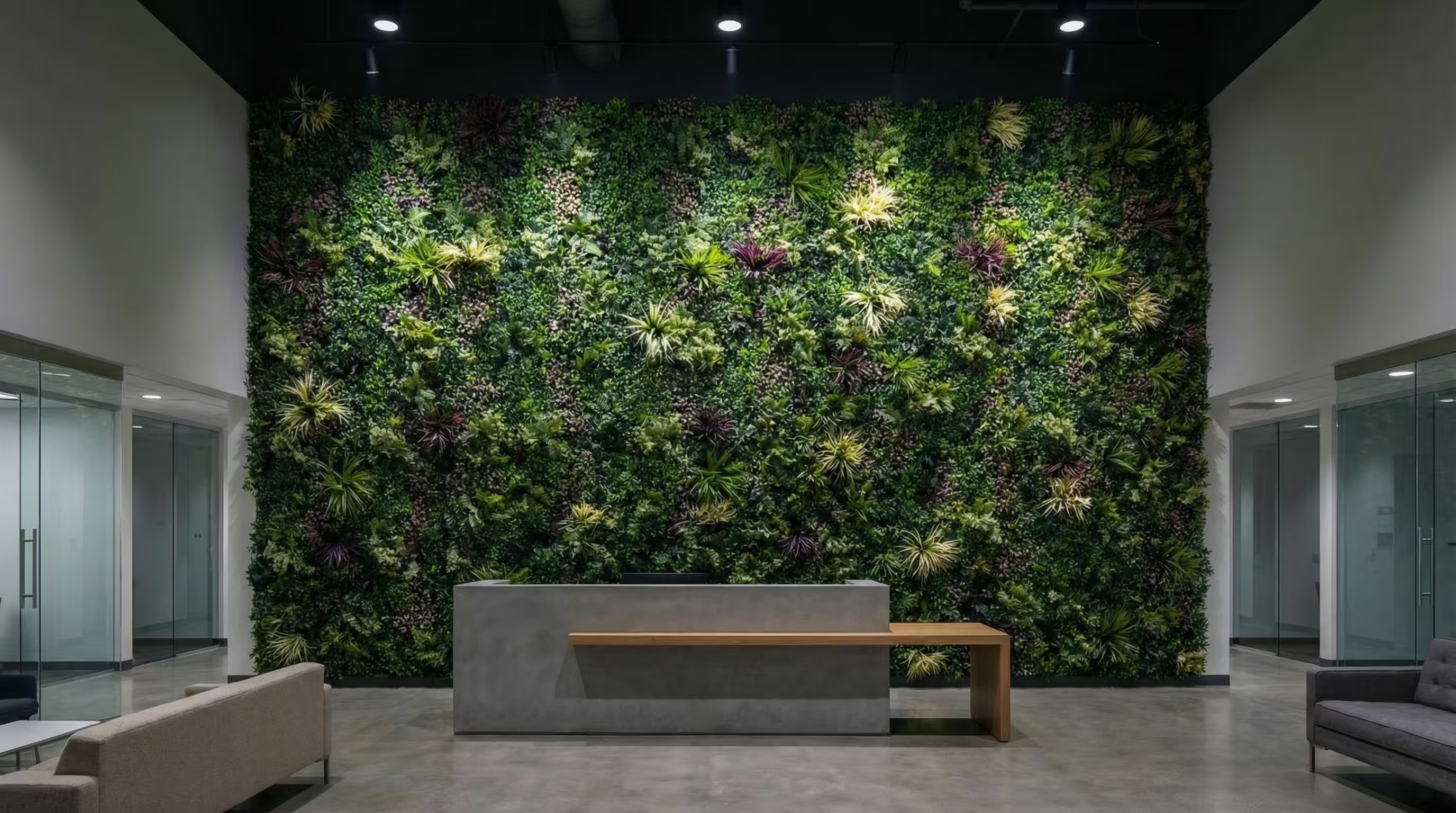
You don’t really understand what “sun exposure” means until you’ve watched a patio chair fade in a single season in Austin, or you’ve seen a west-facing wall in Dallas turn into a griddle by 4 p.m. Texas summers aren’t just hot—they’re bright, long, and nonstop. That’s why people who like the look of greenery (but don’t want irrigation headaches, dead patches, or weekly trimming) keep circling back to ARTIFICIAL LIVING WALLS.
Here’s the thing: not every artificial living wall is built for Texas. Panels that look full and lush in a showroom can flatten out, fade, or warp when they’re pressed against hot masonry in 100°F+ weather, coated in dust, or smacked by thunderstorm gusts.
Planning a similar project? See commercial greenery installs →.
This guide sticks to what matters for Texas installs—whether you’re a homeowner trying to add backyard privacy, a builder wrapping up a mixed-use courtyard, or a hotel team that needs an outdoor bar area to look the same in May and September.
Texas summers are hard on walls for a few specific reasons
Heat is only part of it. Most outdoor wall issues come from a pileup of real-world stressors that hit at the same time in Texas:
1) UV is the slow burn.
Sunlight fades plastics and breaks down pigments. In Houston and San Antonio, you’re dealing with high UV plus humidity. In West Texas, it’s intense UV plus dust and big temperature swings. If your wall gets afternoon sun, treat it like the harshest condition the material will see.
2) Walls trap heat.
A living wall mounted directly to stucco, CMU, or metal cladding can end up sitting in a heat pocket. West-facing walls are usually the problem. That trapped heat speeds up fading and can stress fasteners when the wall and the panels expand at different rates.
3) Wind and thunderstorms test the mounting, not the leaves.
Texas weather doesn’t give much warning. A panel that seems “fine” on calm days can rattle, bow, or start pulling at the corners during storms if it wasn’t anchored well.
4) Dust, pollen, and sunscreen overspray never stop.
Outdoor dining patios, pool decks, and suburban backyards all end up with a film on them. It won’t destroy the wall, but it can make the green look dull and a little gray if you never rinse it.
Plan for those four things and your wall is more likely to look the same month after month—instead of looking perfect on install day and slowly sliding downhill.
What to look for in an artificial living wall that’s going outdoors in Texas
Planning a similar project?
Use these next pages while you read
They cover pricing, service details, and the next planning step without making you leave the article blind.
A good outdoor wall mostly comes down to materials and backing—not just the leaf shape.
UV-stabilized materials (and realistic expectations)
In Texas, you want panels labeled UV-stabilized or UV-rated for outdoor use. That doesn’t mean “won’t fade.” It means the manufacturer added UV inhibitors to slow color change and brittleness.
Here’s the practical version: if your wall gets direct afternoon sun every day, buy the most UV-resistant option you can. And if you need a specific green to match branding (common for hotels and restaurants), order extra panels from the same batch for future repairs. Dye lots can drift a bit over time.
A backing that can handle heat and movement
Leaves get all the attention, but the backing grid is what takes the abuse.
For Texas exteriors, you want a panel backing that:
- stays rigid in heat,
- has plenty of tie points for fasteners,
- and doesn’t turn brittle.
If you’re attaching to a fence, pay extra attention to how the panels connect at seams. A weak seam is usually where wind starts peeling things back.
Density that fits the viewing distance
A wall behind backyard seating can be a little less dense than a wall that’s two feet behind a restaurant banquette where people will stare at it for an hour.
A good rule of thumb:
- Residential privacy wall: you can prioritize coverage and depth from 8–20 feet away.
- Hospitality/photo moment wall: prioritize density and leaf variation because guests will be 1–6 feet away.
If you’re building a branded “step-and-repeat” wall for a hotel lobby or event space, ask for close-up photos in natural light. Some panels look fine at ten feet and plastic at two.
Picking the right location: sun direction matters more than you think
If you’re choosing between two walls, go with the one that gets friendlier light. It’ll look better longer, and you won’t have to clean it as often.
- North-facing walls (or shaded courtyards) are the easiest: less UV, less heat stress.
- East-facing walls get softer morning sun and are often a good fit for homes.
- South-facing walls in Texas can be rough, depending on overhangs.
- West-facing walls are the hardest—hot late-day sun plus heat radiating off the wall.
If you’re stuck with a west-facing wall (a lot of people are), it can still work. Just assume you’ll need better UV-stabilized panels, tighter fastening, and a bit more routine rinsing.
Mounting in Texas: create a small air gap (and don’t cheap out on fasteners)
If there’s one contractor-style tip that keeps outdoor installs looking clean, it’s this: avoid mounting panels flush to a heat-soaked wall if you can. A small air gap lets heat and moisture bleed off and lowers the chance of warping or uneven expansion.
How you do that depends on the surface:
On masonry/stucco/CMU
Builders often use furring strips or a mounting grid so the panels sit slightly off the wall. That gives you a consistent substrate for fastening, too. In commercial settings, it’s often the neatest method because it finishes flatter and makes it easier to swap out panels later.
On metal fencing (common in modern builds)
Use UV-rated zip ties or the right clamps, and add extra attachment points at corners and seams—those are the spots that fail first in wind. You’re not only holding up weight; you’re fighting uplift and flutter.
On wood fencing
Wood moves. It swells, shrinks, and can bow. If the fence is older or already warped, fix that first or expect the living wall to look wavy. For homeowners, the best “budget upgrade” is often replacing the problem fence section before hanging panels.
And yes—fasteners matter in Texas. Heat, rain, and coastal air (hello, Galveston) chew up cheap hardware. If you’ve ever seen rust streaks down a wall, you’ve already learned that lesson.
Fire-rated options for commercial projects (and when you actually need them)
If you’re working on hotels, resorts, restaurants, or any assembly occupancy, fire compliance comes up fast. For interiors, the common question is whether artificial foliage meets a flame propagation standard like NFPA 701 (a National Fire Protection Association test used for textiles and decorative materials).
A few practical notes:
- Fire-rated and fire-retardant aren’t the same as “fireproof.” Nothing decorative is fireproof.
- Certifications are product-specific. A vendor can’t honestly claim all greenery is certified unless that exact item was tested.
- Requirements vary by jurisdiction and by where the wall is installed (interior vs exterior, covered patio vs fully outdoors, distance to ignition sources, etc.).
If you’re a GC or designer, ask for the documentation early so it doesn’t turn into a last-minute scramble before inspection. And if it’s a pool deck bar with heaters and electrical nearby, that’s another reason to check local requirements upfront.
Keeping an artificial living wall looking good through a Texas season
The promise is “low-maintenance,” not “maintenance-free.” In Texas, the upkeep is mostly dust and pollen, not plant care.
For most outdoor installs:
- Rinse periodically with a garden hose on a gentle spray.
- For grime (pool chemicals, sunscreen overspray, urban soot), use mild soap and water and rinse thoroughly.
- Skip harsh degreasers unless you test a small spot first. If it strips the finish or dulls the color, it’s the wrong cleaner.
If you manage a hospitality property, bake rinsing into your regular exterior cleaning. It’s not just about looks—it’s about photos. A wall that reads deep green in July can start photographing gray-green by September if nobody ever hoses it off.
Homeowners: where artificial living walls earn their keep
In Texas homes, artificial living walls usually land in three spots:
Backyard privacy walls.
If a fence line faces a neighbor’s second-story window, panels can create a denser visual barrier than vines—without irrigation. They also look finished immediately instead of waiting a season for growth.
Pool equipment and utility screens.
Nobody wants pool pumps, meters, or AC units in the background. A wall can hide the ugly stuff—just keep the airflow clear where equipment needs it, and don’t block access panels.
Patio and outdoor kitchen backdrops.
If you host, you’ll notice people tend to gather around the bar top or outdoor kitchen. A greenery backdrop softens hardscape and still photographs well even when the lawn is cooked.
And if you’re comparing this to live greenery: water restrictions can make a wall of live plants harder to keep happy than it sounds. Artificial gives predictable coverage without running drip lines or replacing casualties after a heat wave.
Builders, hotels, and resorts: think in terms of replacement and repeatability
Commercial projects have different constraints. You’re not only chasing “looks good,” you’re designing for:
- quick turnarounds,
- predictable maintenance,
- and the fact that somebody will eventually damage a section.
A few habits that help:
- Standardize one panel type and keep extra inventory for repairs, especially near high-traffic patios and valet areas.
- Build in access panels near outlets, hose bibs, and lighting drivers.
- Plan lighting early. Uplights and wall washers can make artificial foliage look more dimensional at night, but they’ll also expose seams if the layout is sloppy.
Hotels get the most value when these walls go where guests actually hang out—outdoor bars, pool cabanas, lobby spill-out areas—rather than a random blank wall nobody photographs. You don’t need the biggest wall. You need the right wall.
The part people skip: ordering samples and viewing them outside
If you do one “extra” thing before buying, do this: look at a sample in the exact conditions where it’ll live.
Take the sample outside at 9 a.m., 2 p.m., and at dusk. Hold it against the surface (stucco reads different than white brick; black metal fencing changes how green looks). If it’s for a restaurant or hotel, check it under your nighttime lighting too.
Artificial living walls can look wildly different under warm LEDs than they do in daylight. Better to learn that now than after the whole wall is up.
FAQ
How do artificial living walls handle direct Texas sun?
If the panels are UV-stabilized and mounted well, they can take sun, but direct west-facing exposure is the toughest setup. Expect some gradual color shift over time—sun fades everything. Your best defense is an outdoor-rated panel, a small air gap behind it, and hardware that won’t fail in heat.
Can I install an artificial living wall on a fence without damaging it?
Usually, yes. Many homeowners attach panels to wood or metal fencing with outdoor-rated zip ties, staples, or screws (depending on the fence type). The bigger question is whether the fence is straight and solid. If the fence is already warped or loose, the living wall will mirror that.
Do I need fire-rated artificial living walls for a hotel or restaurant?
Often for interiors, yes—many commercial spaces need documentation for decorative materials. Look for products that are NFPA 701 Method 2 certified when the project calls for it, and confirm requirements with your local inspector or fire marshal since enforcement can vary by city and by where the wall is installed (interior vs covered patio vs fully outdoors).
What's the easiest way to clean an outdoor artificial living wall in Texas?
A hose rinse is usually enough. For heavier buildup (pollen, pool chemical residue, city dust), use mild soap and water and rinse well. If you're cleaning near a pool deck or outdoor kitchen, test a small spot first—some cleaners can dull the finish on certain plastics.
Related articles
This article is part of our complete guide to artificial living walls in Texas, which covers materials, indoor vs outdoor, commercial applications, installation, and more.
You might also find these useful:
Need a next step?
Need fire-rated options or documentation?
Send the wall size, project type, and timeline. We can tell you when fire-rated foliage or documentation belongs in the scope.
Ready for the next step?
Use the page that fits your project best
Pick the shortest path based on whether you need pricing, a service page, or a local planning page.