Texas restaurant patios run most of the year. In Austin, San Antonio, Houston, and Dallas, outdoor dining isn't seasonal—it's the default for a large share of the calendar. And for most restaurants, the patio is where the photos happen, where the ambiance matters most, and where the competition for a customer's attention plays out.
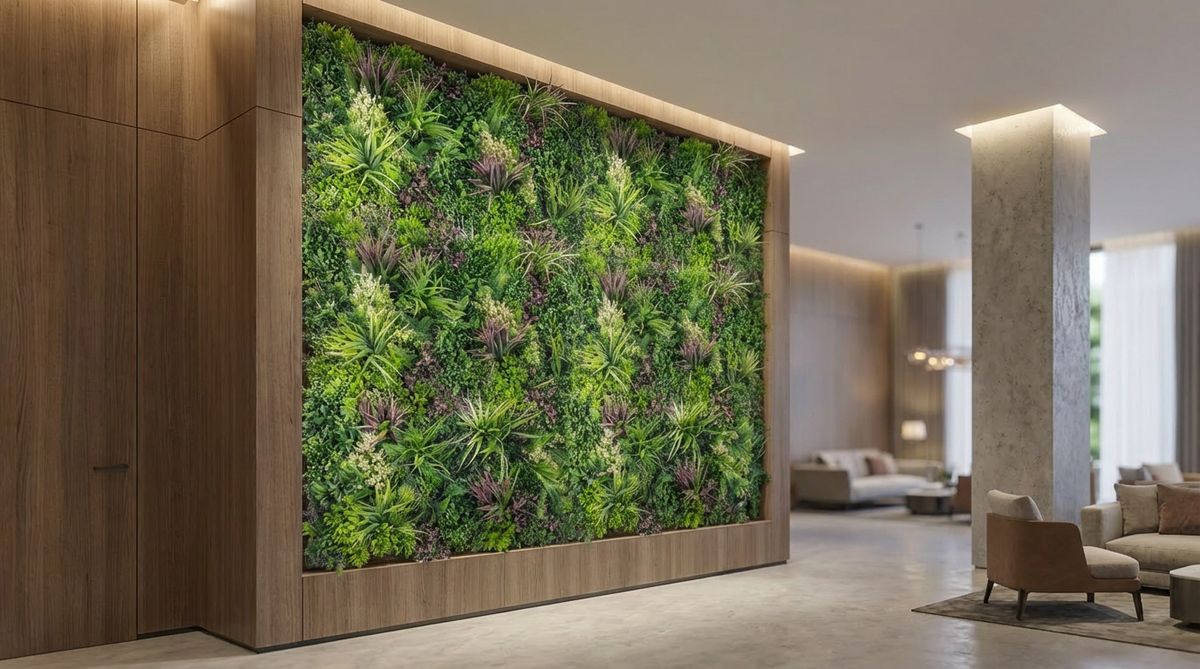
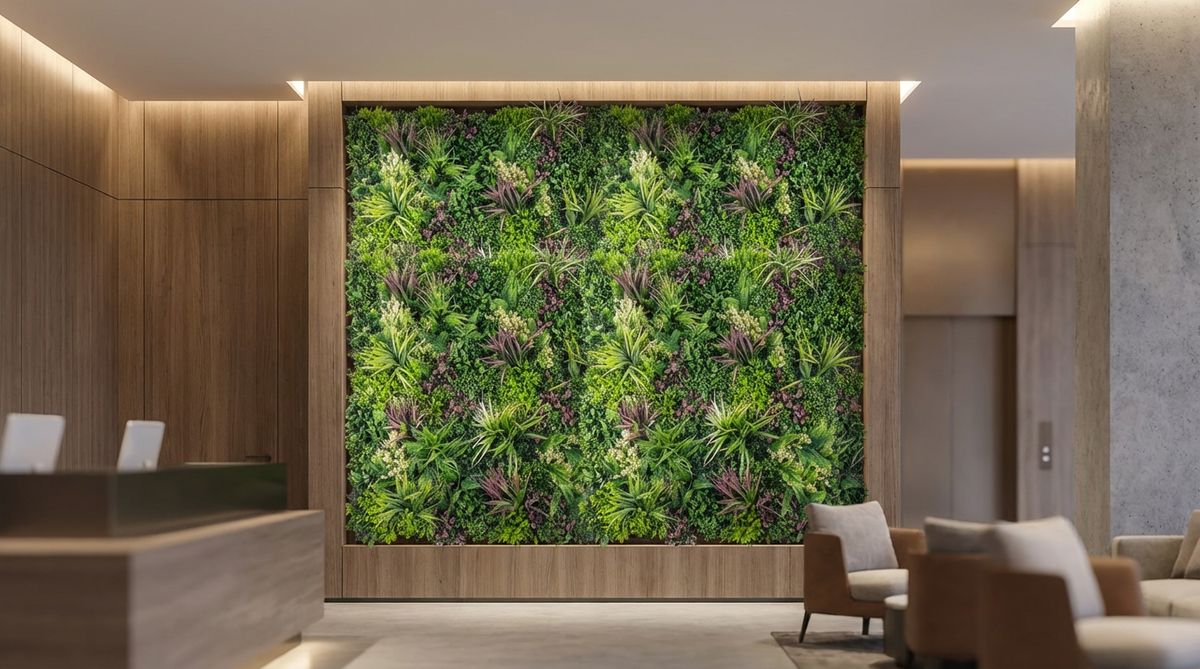
A living wall—an artificial vertical garden on a patio wall, fence, or freestanding structure—has become one of the most common design elements in Texas restaurant patios. The appeal is obvious: it softens hardscape, creates a lush backdrop for photos and social media, and defines the space without blocking sightlines or airflow.
Planning a similar project? See artificial living wall installs →.
But restaurant patios add real-world considerations that a residential backyard doesn't face: fire codes for assembly occupancies, food safety inspections, grease and smoke exposure, high foot traffic, and the need to look good every single day because every day is a business day.
This article covers what restaurant owners and designers need to know about artificial living walls on Texas patios.
Why artificial instead of live
Live planted walls on restaurant patios sound great in theory. In practice, they introduce problems that artificial walls avoid:
Irrigation near food service. A live wall needs a plumbing system that runs water through or behind the wall. On a patio where food is being served, that means potential leaks near dining areas, humidity issues, and an irrigation system that needs monitoring and maintenance.
Pests. Soil, moisture, and organic matter attract insects. On a restaurant patio, any pest issue—real or perceived—is a problem. Artificial living walls have no soil, no moisture retention, and no organic matter. They don't create habitat for mosquitoes, gnats, or other insects.
Inconsistent appearance. Live walls look great when everything is working. They look terrible when a section dies from heat stress, pest damage, or an irrigation malfunction. On a restaurant patio, a patchy wall with dead plants is worse than no wall at all.
Seasonal limitations. Even in Texas, some planted wall species struggle during peak summer heat or unexpected cold snaps. Artificial panels look the same in August as they do in March.
Maintenance burden. Live planted walls on restaurant patios need a dedicated maintenance schedule—pruning, fertilizing, pest treatment, irrigation adjustments, and plant replacement. That's labor and cost on top of an already demanding kitchen and front-of-house operation.
Artificial living walls need periodic cleaning and an annual fastener check. For a restaurant owner, that's a meaningful operational difference.
Fire code considerations for restaurant patios
Planning a similar project?
Use these next pages while you read
They cover pricing, service details, and the next planning step without making you leave the article blind.
Restaurants are classified as assembly occupancies under the International Building Code (IBC), which Texas adopts with local amendments. Assembly occupancies face stricter requirements for interior finishes and decorative materials than most other building types because of the number of people in the space.
How fire codes apply to your patio depends on how the patio is classified:
Fully open-air patios (no roof, no walls on three or more sides) generally face less fire code scrutiny for decorative materials. Local enforcement varies.
Covered patios (roof structure over the dining area) may be classified as interior space for fire code purposes, depending on the degree of enclosure. This is where requirements for fire-rated materials are most likely to apply.
Enclosed patios (roof plus walls or roll-down screens) are typically treated as interior space and subject to the same fire requirements as indoor dining rooms.
The practical advice: if your patio has any roof structure or enclosure, check with your local Authority Having Jurisdiction (AHJ)—usually the fire marshal or building inspector—before installing decorative materials. If fire-rated products are needed, options tested to NFPA 701 are available.
For a detailed comparison of fire test standards, see our NFPA 701 vs ASTM E84 guide. For broader fire compliance guidance, see our fire-rated artificial greenery guide for commercial properties.
Placement and kitchen proximity
Restaurant patios have something most other environments don't: a commercial kitchen nearby. Grills, smokers, fryers, and exhaust systems all affect nearby surfaces.

Grease and smoke exposure
Kitchen exhaust creates a fine film of grease and smoke particles that settles on nearby surfaces. Over weeks and months, this film coats artificial foliage, dulling the color and trapping dust. The film doesn't damage quality polyethylene panels, but it changes the appearance if left uncleaned.
Position the living wall away from direct exhaust paths. If the kitchen exhaust vents toward the patio, locate the wall on the opposite side or perpendicular to the exhaust direction. The farther the wall is from the grease source, the less cleaning it needs.
Plan for regular cleaning. Near a kitchen, monthly cleaning with mild soap and water is reasonable. Farther from the kitchen, quarterly cleaning may be sufficient. Build this into your regular cleaning schedule—it takes less time than maintaining live plants.
Heat from kitchen equipment
If the living wall is mounted on or near a wall that backs up to kitchen equipment (ovens, grills, hood systems), check the surface temperature of that wall. Extreme heat can affect panel backing materials over time. A mounting grid with an air gap solves this by keeping the panels off the hot surface.
Separation from open flames
This applies regardless of fire rating: don't mount decorative materials—artificial or live—directly adjacent to open flame sources like patio heaters, fire pits, or tiki torches. Maintain separation distance, and position the living wall where it serves as a backdrop, not a heat shield.
What makes a restaurant patio wall work
Mixed foliage for visual depth
The best restaurant living walls use mixed foliage—ferns, grasses, trailing vines, mosses, and small accent plants layered at different depths. This creates the dimensional, "planted" look that reads as an intentional design element rather than a green sheet on the wall.
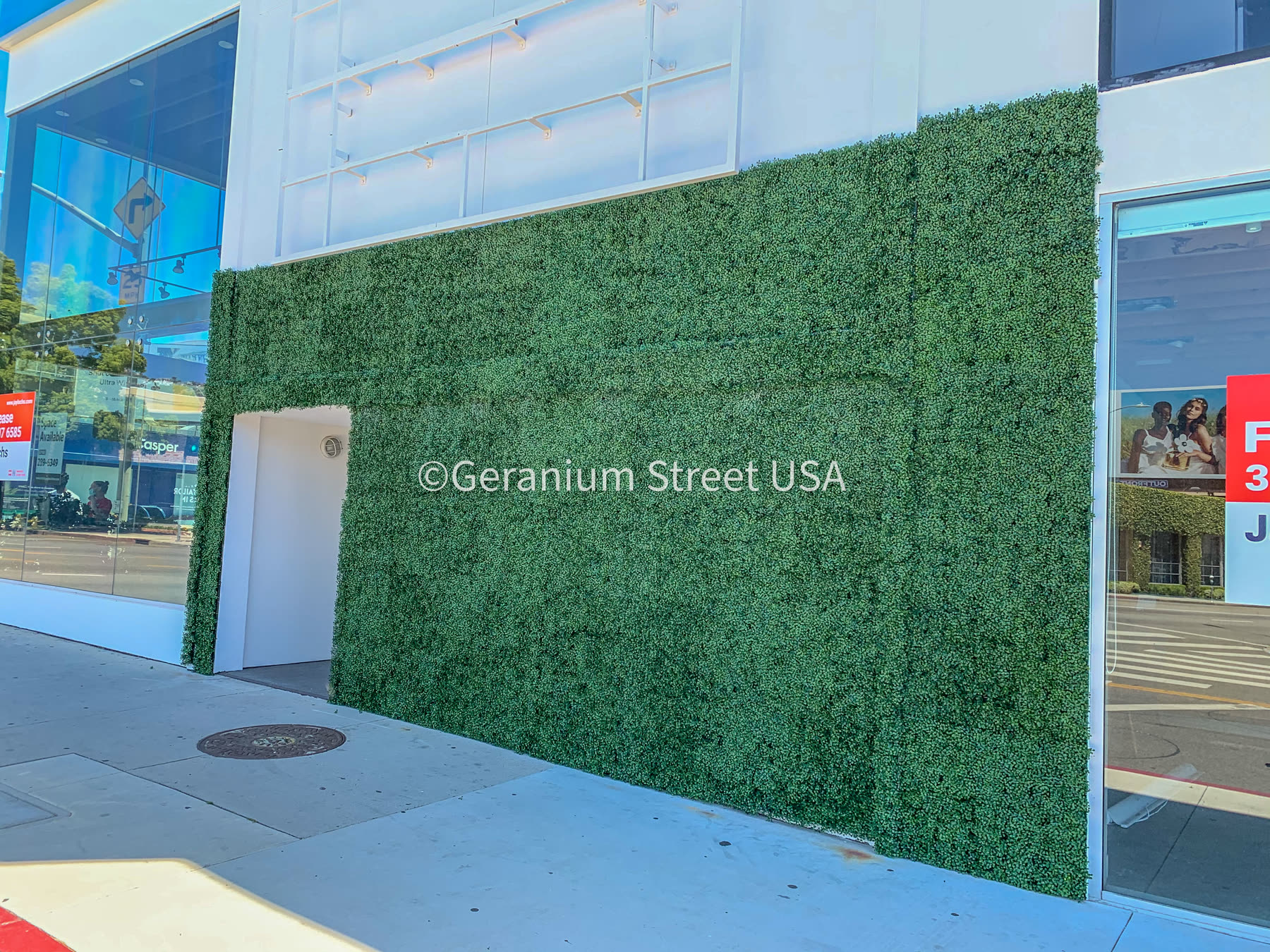
For a detailed comparison of living walls vs. hedge panels, see our complete guide to artificial living walls in Texas.
Lighting integration
Outdoor lighting transforms a living wall. Without it, the wall disappears after sunset—which is when most restaurant patios are busiest.
Uplighting from ground-level or low-mounted fixtures washes the wall with warm light, creating shadows and depth in the foliage. This is the most effective technique for restaurant walls.
String lights or overhead bistro lights create ambient glow above the dining area and softly illuminate the upper portion of the wall.
Accent lighting (small spotlights or wash lights) can highlight specific sections or create focal points behind a bar or feature seating area.
Plan the lighting before the wall goes up. Running low-voltage wiring behind or around the panels is easier during installation than after.
Durability for high-traffic areas
Restaurant patios have chairs pushed against walls, servers carrying trays in tight spaces, and guests leaning against or touching surfaces. If the living wall is within arm's reach of seating, the lower sections will get bumped, brushed, and occasionally grabbed.
Choose panels with sturdy backing grids and resilient foliage that springs back after contact. Mount the lower edge of the wall high enough that chair backs don't hit it, or accept that the bottom row of panels may need occasional adjustment.
Social media and photography
This is a real business consideration. A living wall on a restaurant patio creates a backdrop that guests photograph and share. That organic visibility has value—and it works best when the wall looks good in photos.
What makes a wall photograph well:
- Mixed foliage with varied textures and shades of green (uniform panels look flat in photos)
- Even, warm lighting (harsh shadows kill the look)
- Enough wall coverage to fill a photo frame without showing the edges
- Proximity to seating so guests can pose in front of it naturally
Installation considerations for restaurant patios
- Schedule installation during slow hours or a closure day. Drilling, fastening, and debris don't mix with table service.
- Protect dining surfaces. Cover tables, chairs, and bar tops during installation. Metal filings, dust, and fastener scraps are hard to clean off fabric and finished surfaces.
- Use stainless steel or coated fasteners. The combination of kitchen humidity, cleaning chemicals, and Texas weather corrodes standard hardware quickly.
- Plan for access. Don't mount the wall in a way that blocks electrical panels, hose bibs, plumbing cleanouts, or fire extinguisher cabinets. If the wall covers any of these, build in removable sections.
- Consider panel removal for deep cleaning. In high-grease environments, being able to remove a panel for cleaning or replacement is useful. A mounting system that allows individual panel access (rather than one continuous face) gives you that flexibility.
Health department considerations
Artificial living walls do not introduce the food safety concerns that live planted walls do. There is no soil, no standing water, no organic matter decomposing, and no irrigation system that could leak or create moisture issues near food prep or dining areas.
That said, any surface in a restaurant needs to be maintained. The Texas Department of State Health Services administers food establishment regulations, and local health departments conduct inspections. A dusty or visibly dirty decorative wall near a dining area could attract attention during an inspection, the same as any other unclean surface.
The solution is simple: include the living wall in your regular cleaning schedule. Clean panels don't create health department issues.
Related articles
This article is part of our complete guide to artificial living walls in Texas, which covers materials, indoor vs outdoor, residential and commercial applications.
You might also find these useful:
For commercial living wall products, see our commercial living wall page or Vallum FRX system.
FAQ
Do restaurant patios need fire-rated artificial living walls?
It depends on your jurisdiction and the patio configuration. Restaurants fall under assembly occupancy classifications in the International Building Code, which Texas adopts. Covered patios, enclosed patios, and indoor dining rooms face stricter requirements for decorative materials than fully open-air spaces. Check with your local fire marshal or building official early in the project.
Will kitchen grease and smoke damage artificial living walls?
Grease and smoke create a film on artificial foliage over time, especially on walls near grill stations, fryers, or smoker exhausts. The film does not damage quality polyethylene panels, but it dulls the appearance and can attract dust. Regular cleaning with mild soap and water prevents buildup. Position the living wall away from direct exhaust paths where possible.
Can artificial living walls pass a health inspection?
Artificial living walls do not harbor soil, standing water, or organic matter that attracts pests—which makes them a lower risk than live planted walls in food service environments. However, any surface in a restaurant must be maintained and kept clean. Dusty or grease-coated panels could draw attention during an inspection. A regular cleaning schedule addresses this.
How long do artificial living walls last on a restaurant patio?
Outdoors in Texas, lifespan depends on sun exposure, product quality, and maintenance. Indoor installations usually hold appearance longer because they avoid direct UV exposure. Near kitchens, more frequent cleaning helps preserve the wall.
References
- International Code Council (IBC): https://www.iccsafe.org/
- NFPA 701, Standard Methods of Fire Tests for Flame Propagation of Textiles and Films: https://www.nfpa.org/codes-and-standards/nfpa-701-standard-development/701
- Texas Department of State Health Services: https://www.dshs.texas.gov/
Need a next step?
Need fire-rated options or documentation?
Send the wall size, project type, and timeline. We can tell you when fire-rated foliage or documentation belongs in the scope.
Ready for the next step?
Use the page that fits your project best
Pick the shortest path based on whether you need pricing, a service page, or a local planning page.