Introduction
Texas homeowners face a unique dilemma when considering living walls. The scorching summers, unpredictable storms, and water restrictions make traditional plant walls a challenge. But artificial alternatives come with their own trade-offs.
This isn't just about aesthetics—it's about durability against 110°F heat, surviving hailstorms, and whether you'll spend weekends pruning or relaxing. We'll break down installation costs, how each handles Texas weather, and which option actually increases property value.
Planning a similar project? See artificial hedge installs →.
The decision impacts your home's microclimate too. Real plants can cool surrounding areas through evapotranspiration, while advanced artificial materials now incorporate heat-reflective properties. We'll examine how both perform in different Texas regions—from the humid Gulf Coast to the arid Trans-Pecos.
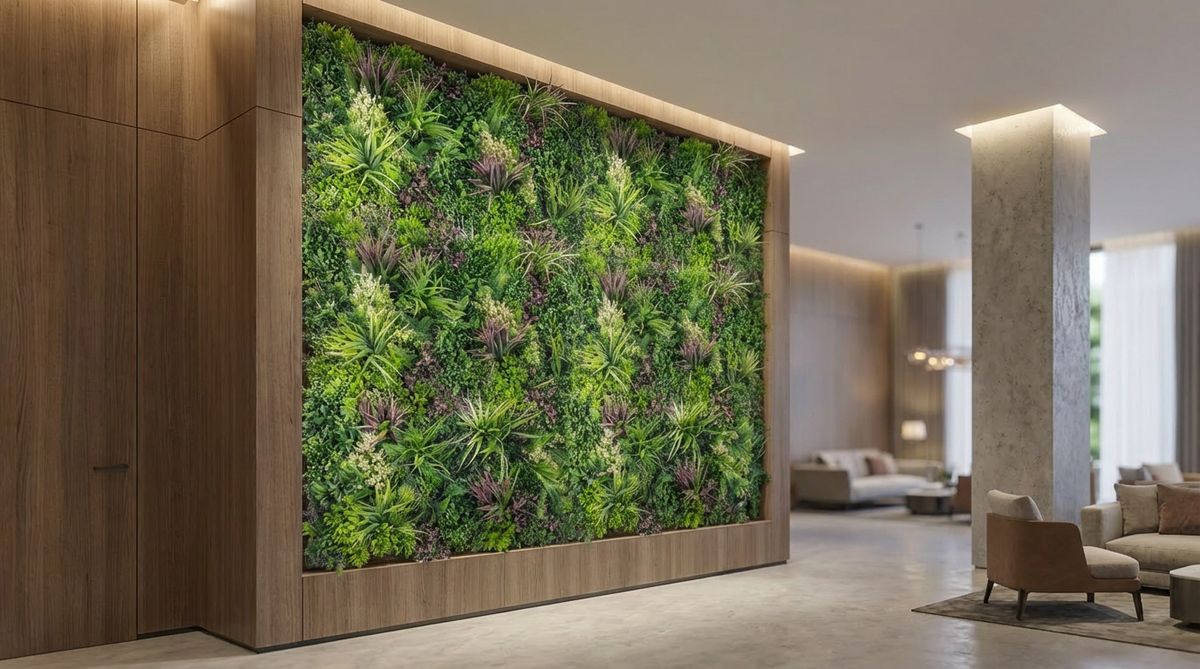
The Water Problem Nobody Talks About
Planning a similar project?
Use these next pages while you read
They cover pricing, service details, and the next planning step without making you leave the article blind.
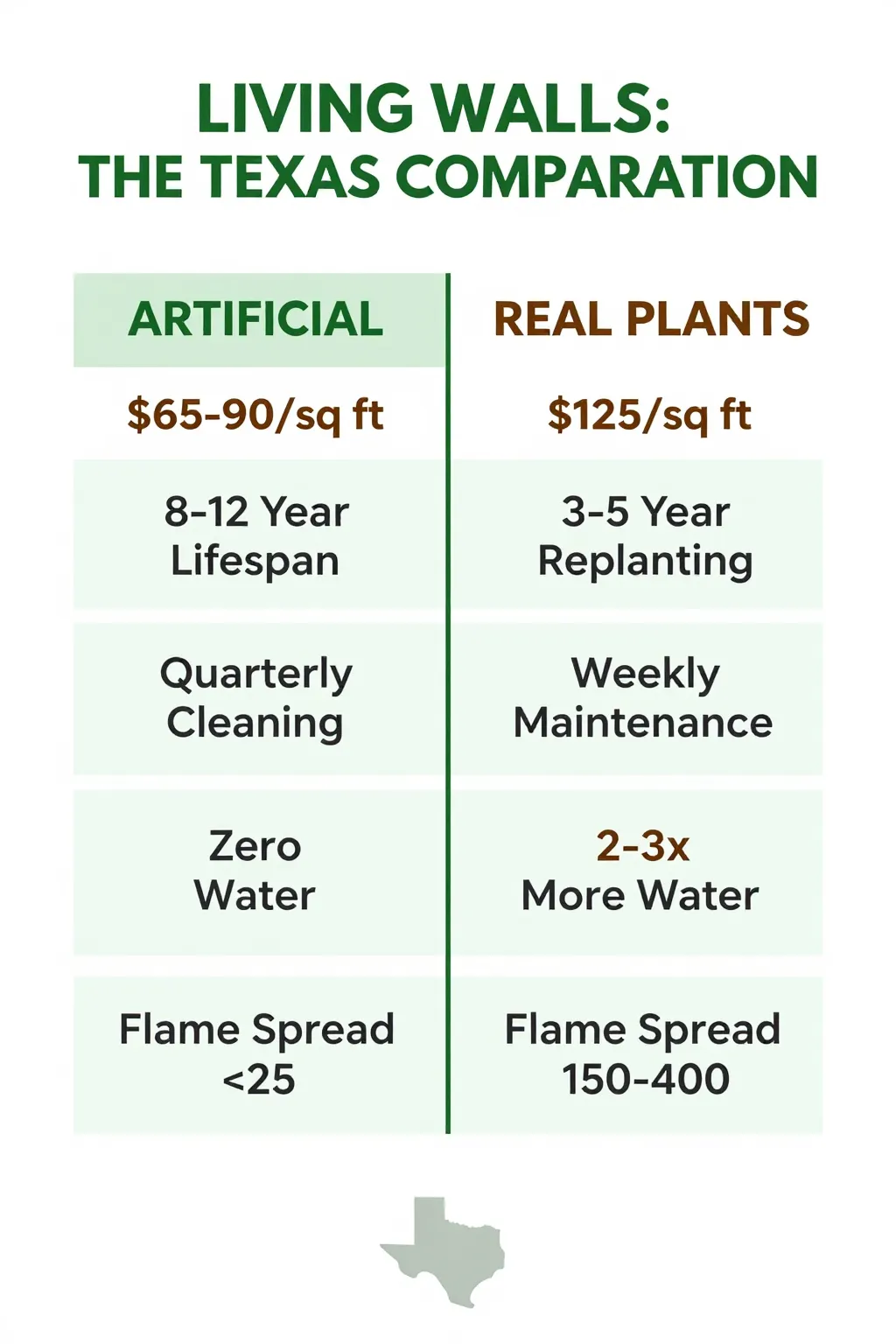
Real living walls in Texas require 2-3 times more water than ground-level landscaping. Municipal restrictions in cities like Austin and San Antonio often prohibit the necessary irrigation. Artificial walls eliminate water use entirely—a selling point during drought years.
But there's a catch. Cheap plastic plants can fade under UV exposure. High-quality faux greenery uses UV-stabilized materials that resist yellowing. The best options mimic natural transpiration with textured surfaces that prevent heat buildup.
Water requirements vary dramatically by plant selection. Succulent walls need 0.5 gallons per sq ft weekly, while tropical mixes may require 2 gallons. Drip systems lose 15-20% more water to evaporation in vertical setups versus ground irrigation. Some homeowners install rainwater collection systems, but these add $3,000-$5,000 to project costs.
For artificial walls, cleaning methods affect water savings. Pressure washing uses 2-5 gallons monthly, while electrostatic dust removal systems eliminate water use completely. Consider your local water rates—at $7 per 1000 gallons in Houston, real walls can add $300+ annually to utility bills.
When Hail Hits at 70 MPH
Texas storms destroy real plants in minutes. A single hailstorm can shred delicate leaves, requiring complete replanting. Artificial walls withstand impact better—but only if they're installed with reinforced backing systems.
Look for panels rated for wind loads above 90 mph (common in coastal areas). Properly secured artificial walls have survived hurricanes along the Gulf Coast. Real living walls need protective covers during severe weather alerts.
Impact resistance tests show that:
- 1" hail damages 60% of real wall plants
- High-density polyethylene artificial leaves withstand up to 2" hail
- Aluminum frame systems outperform plastic in wind tunnels
For real walls, select resilient species like yucca or agave that can regenerate after storm damage. In hail-prone areas like the Texas Panhandle, artificial walls with flexible stems better absorb impact energy without permanent deformation.
The Hidden Maintenance Trap
Real living walls demand weekly attention:
- Pruning overgrowth that blocks windows
- Treating mold from humidity
- Replacing plants that scorch in direct sun
Artificial versions need quarterly cleaning with a leaf blower or gentle hose spray. But they collect dust faster than you'd expect—especially near highways where particulate pollution settles.
Maintenance timelines reveal stark differences:
| Task | Real Walls | Artificial Walls |
|---|---|---|
| Pruning | Weekly | Never |
| Fertilizing | Monthly | Never |
| Pest Control | Seasonal | Never |
| Deep Cleaning | Never | Quarterly |
| Component Replacement | Annual | 5-7 years |
Real walls require specialized care—pH-balanced fertilizers, root zone monitoring, and seasonal plant rotation. Artificial walls develop maintenance needs over time: UV coating reapplication, stem reinforcement, and color touch-ups after 5+ years.
Installation Costs That'll Surprise You
Professional installation of real living walls starts at $125/sq ft in Dallas due to:
- Irrigation systems
- Structural reinforcements for weight
- Frequent plant replacements
Artificial walls run $65-$90/sq ft installed. The break-even point happens around year three when you factor in water bills and maintenance labor.
Cost components vary significantly:
Real Walls
- Structural assessment: $500-$1,500
- Irrigation system: $15-$25/sq ft
- Plants: $20-$40/sq ft
- Annual maintenance contract: $8-$12/sq ft
Artificial Walls
- Custom framing: $10-$15/sq ft
- UV-resistant panels: $30-$50/sq ft
- Installation hardware: $5-$8/sq ft
- Cleaning service (optional): $2-$4/sq ft
Financing options differ too. Some Texas nurseries offer 12-month payment plans for real walls, while artificial wall suppliers typically require full payment upfront. Energy companies may offer rebates for artificial walls that reduce urban heat island effects.
Which Actually Boosts Home Value?
Realtors report artificial walls appeal to buyers in drought-prone areas. They're seen as "move-in ready" features. Real plant walls attract eco-conscious buyers but can deter those wary of maintenance.
Appraisers typically value both at 50-75% of installation cost—similar to other landscaping features. The key is choosing an option that complements your home's architecture. Mediterranean styles suit real herbs, while modern designs pair well with structured artificial panels.
Market research shows:
- 68% of Austin buyers prefer low-maintenance landscaping
- Real walls increase 'curb appeal' scores by 15% in luxury markets
- Artificial walls show better ROI in rental properties
- Hybrid systems (80% artificial with live accents) test well across demographics
Consider your selling timeline. Real walls take 6-12 months to reach full aesthetic potential, while artificial walls deliver immediate impact. For investment properties, artificial walls avoid tenant maintenance issues.
Fire Ratings Matter More Than You Think
Texas building codes require specific flame retardancy for exterior installations. Many artificial plants meet NFPA 701 standards[1], while real plants become fuel during wildfire season.
This is critical for homes near brush areas. Some HOAs now mandate fire-resistant landscaping—making artificial walls the only compliant choice in high-risk zones.
Fire performance comparisons:
- Real walls: Flame spread rating of 150-400 (varies by plant type)
- Artificial walls: Flame spread rating under 25 when properly treated
- Ember resistance: Artificial walls outperform in wind-driven tests
In the Hill Country, where wildfire risk is extreme, some homeowners combine artificial walls with stone barriers for added protection. Succulent-based real walls offer moderate fire resistance but still require clearance zones.
FAQ
Do artificial living walls look fake up close?
Higher-end options use silk leaves with veining and color variation. At conversational distance, quality artificial walls are indistinguishable—especially when mixed with some real trailing plants at the base. Look for manufacturers that offer multiple color gradients within single leaves to mimic natural growth patterns. Some premium brands even incorporate subtle brown edges on 'older' leaves for added realism.
Can I install these myself?
Artificial panels under 50 sq ft are DIY-friendly with mounting clips. Real living walls require professional design due to irrigation and weight considerations. For artificial walls, ensure your wall surface can support the weight (typically 3-5 lbs per sq ft) and use corrosion-resistant fasteners for outdoor installations. Real walls need structural assessments since saturated soil can weigh 15-20 lbs per sq ft.
How long do they last outdoors?
Artificial wall lifespan depends on material quality, sun exposure, and maintenance. Outdoor installations in Texas generally show wear sooner than indoor ones, while real walls often need ongoing plant replacement as growing conditions change.
Do living walls attract pests?
Real living walls can harbor aphids, spider mites, and other insects, especially when stressed by heat. Artificial walls avoid this but may collect cobwebs. For real walls, integrate pest-resistant plants like rosemary or lavender. For both types, maintain at least 6 inches of clearance from your home's exterior to prevent pest migration.
Which option stays cooler in summer?
Real plants provide natural cooling through transpiration, lowering nearby temperatures by 5-10°F. Artificial walls made with breathable backing materials can reduce heat absorption by 30% compared to solid surfaces. Some hybrid systems combine artificial panels with strategically placed live plants for balanced temperature regulation.
Are there tax incentives for either option?
Some Texas municipalities offer water conservation rebates for artificial walls during drought periods. Real living walls may qualify for green building tax credits in certain cities if part of a certified sustainable landscape design. Check with local water districts and the Texas Commission on Environmental Quality for current programs.
Conclusion
For most Texas homeowners, artificial living walls offer practical advantages—especially west of I-35 where water scarcity worsens. But if you enjoy gardening and have irrigation access, real plant walls provide unmatched seasonal variation.
Before deciding, consider:
- Your local climate extremes (heat, hail, drought frequency)
- Available time for maintenance
- Long-term water cost projections
- Fire risk in your area
- Planned duration of home ownership
Request samples of UV-stabilized artificial plants to see the quality difference. Or visit our Austin showroom to compare both types side-by-side under simulated Texas weather conditions. For personalized advice, consult with a landscape architect who specializes in both living wall types—they can assess your specific microclimate and structural requirements.
Related articles
This article is part of our complete guide to artificial living walls in Texas, which covers materials, indoor vs outdoor, commercial applications, installation, and more.
You might also find these useful:
- Artificial living walls for Texas summers: what holds up when it's 105°F
- Faux living walls transforming Texas office spaces
References
Need a next step?
Need a real starting number for your project?
Use the pricing page for quick benchmarks, then send dimensions and photos for a tighter range.
Ready for the next step?
Use the page that fits your project best
Pick the shortest path based on whether you need pricing, a service page, or a local planning page.