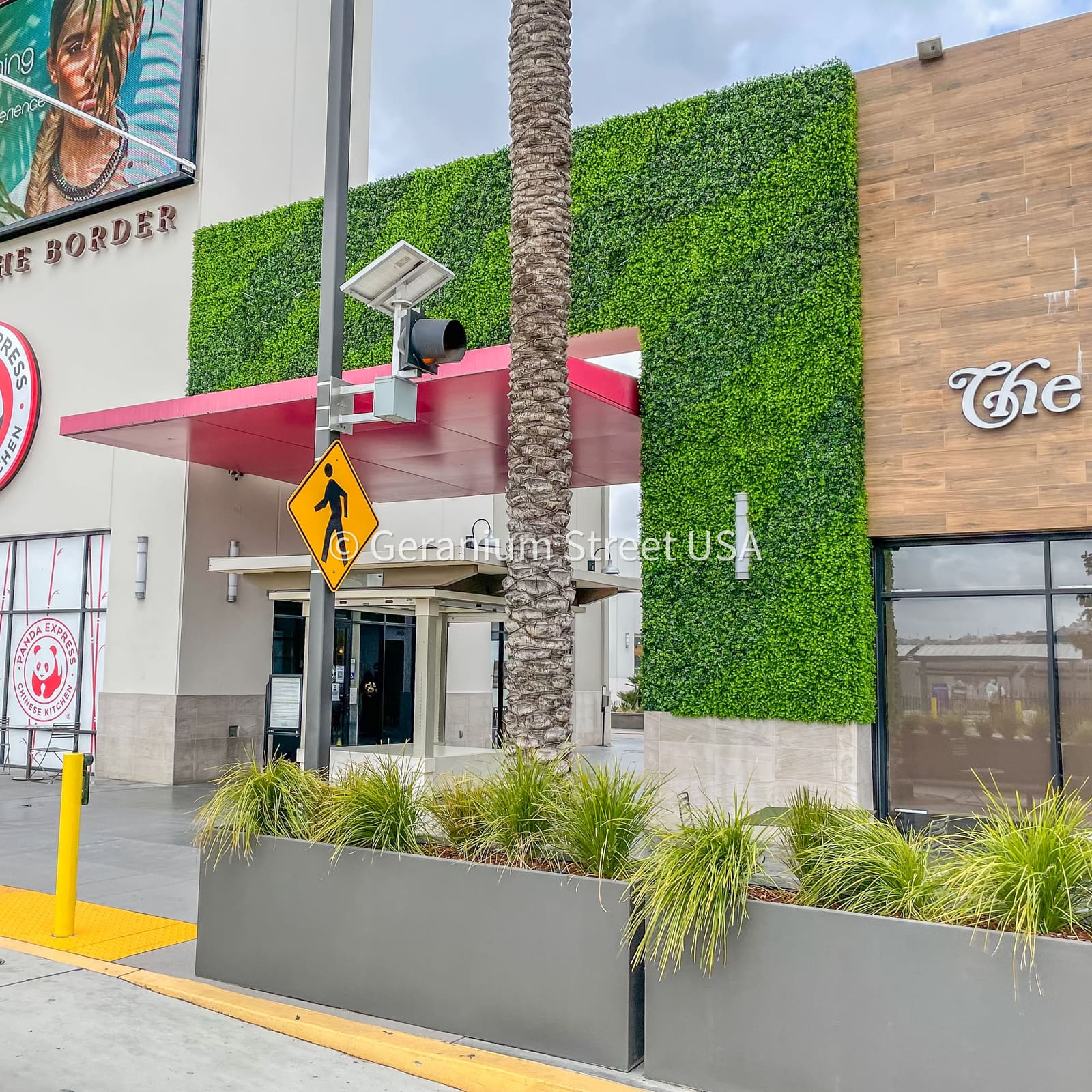
Walk into any recently designed office, coworking space, hotel lobby, or upscale retail store, and you'll likely see greenery on the walls. It's not a coincidence and it's not just decoration. It's biophilic design—a deliberate strategy to bring natural elements into built environments because research consistently shows it makes people feel and perform better.
The challenge is that live planted walls are expensive to install, demanding to maintain, and risky in spaces where facilities teams are already stretched thin. This is where artificial living walls come in: they deliver the visual and psychological benefits of biophilic design without the maintenance burden.
Planning a similar project? See artificial living wall installs →.
This article covers what biophilic design actually means, what the research says, and how artificial green walls deliver these benefits in offices and retail spaces.
What biophilic design is
The term comes from biologist Edward O. Wilson's "biophilia hypothesis," which proposes that humans have an innate need to connect with nature and living systems. Biophilic design translates this idea into architecture and interiors.
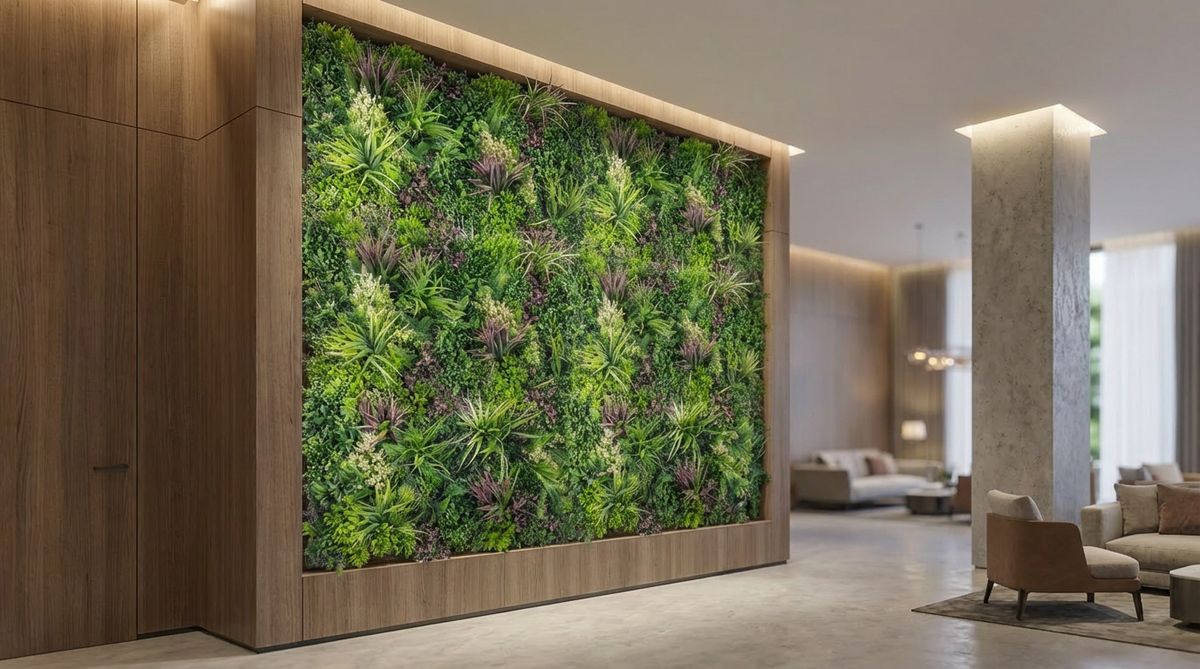
The core principles include:
- Direct nature connection — plants, water features, natural light, views of nature
- Natural materials — wood, stone, natural fibers
- Natural patterns — organic shapes, fractal patterns, varied textures
- Sensory engagement — sounds, scents, and textures that evoke natural environments
Green walls—vertical surfaces covered in foliage—are one of the most visible and impactful ways to incorporate biophilic design into a commercial space, particularly in urban environments where access to nature is limited.
What the research shows
Planning a similar project?
Use these next pages while you read
They cover pricing, service details, and the next planning step without making you leave the article blind.
Several bodies of research support the use of greenery in workplaces and commercial spaces:
Stress reduction. A widely cited study published in the Journal of Physiological Anthropology found that interaction with indoor plants can reduce physiological and psychological stress. The researchers measured cortisol levels and self-reported comfort, finding improvements in both when participants worked near plants.
Productivity and cognitive performance. Research from the University of Exeter found that enriching a lean office environment with plants increased productivity by 15%. The study, published in the Journal of Experimental Psychology: Applied, compared work output in green offices versus lean (bare) offices.
Perceived wellness. A Human Spaces study surveying over 7,600 office workers in 16 countries found that employees in offices with natural elements reported 15% higher levels of wellbeing and 6% higher levels of productivity. Natural elements included plants, natural light, and greenery.
Retail behavior. Research on retail environments suggests that greenery and natural elements increase dwell time, improve perception of product quality, and create more favorable shopping experiences. While specific sales impact varies, the environmental psychology literature consistently links natural elements to positive consumer behavior.
A note on real vs. artificial
Most biophilic design research uses live plants. The question of whether artificial greenery provides equivalent benefits is less studied. However, research on visual responses to greenery suggests that much of the benefit comes from the visual presence of green, natural-looking elements—not from the biological activity of living plants.
Real plants offer additional benefits that artificial ones don't: air quality improvement (though the practical impact in a commercial HVAC environment is debated), humidity regulation, and the dynamic quality of living things. Artificial plants offer benefits that real ones don't: zero maintenance, consistent appearance, no pest risk, no irrigation, and no replacement cost.
For most commercial applications, the practical advantages of artificial greenery outweigh the incremental benefits of live plants—especially when the alternative is no greenery at all because the maintenance burden is too high.
Office applications
Reception and lobby
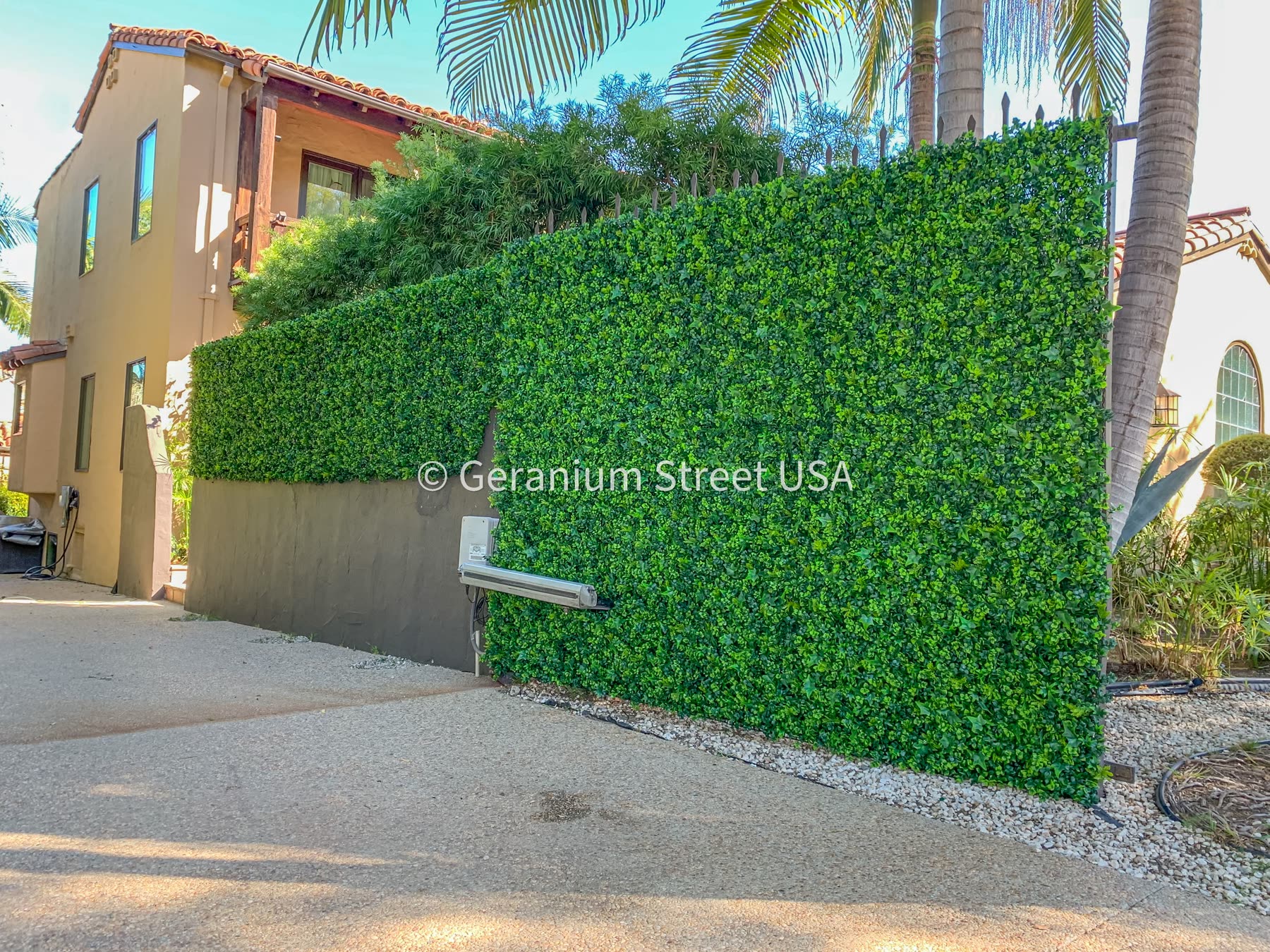
The entrance is where first impressions happen—for employees, clients, and visitors. A living wall behind or beside the reception desk is the most common placement, and for good reason: it's the highest-traffic, highest-visibility spot in the office.
Design considerations:
- Choose mixed foliage with varied textures and depths for visual richness
- Integrate warm lighting to make the wall a focal point
- Consider incorporating company signage or logos within the wall design
Common areas and break rooms
Break rooms, kitchens, and lounge areas are where employees decompress. A green wall in these spaces reinforces the idea that the space is designed for wellbeing, not just function.
Conference rooms and video call backdrops
A living wall behind the camera in a conference room serves double duty: it improves the in-person meeting experience and creates a professional, distinctive backdrop for video calls. In a remote/hybrid work environment, this has become a genuine business consideration.
Coworking spaces
Coworking environments use living walls as both design elements and differentiators. The wall becomes part of the brand—it shows up in member photos, social media posts, and marketing materials. For more on office applications, see our guide on faux living walls in Texas office spaces.
Retail applications
Store entrance and window displays
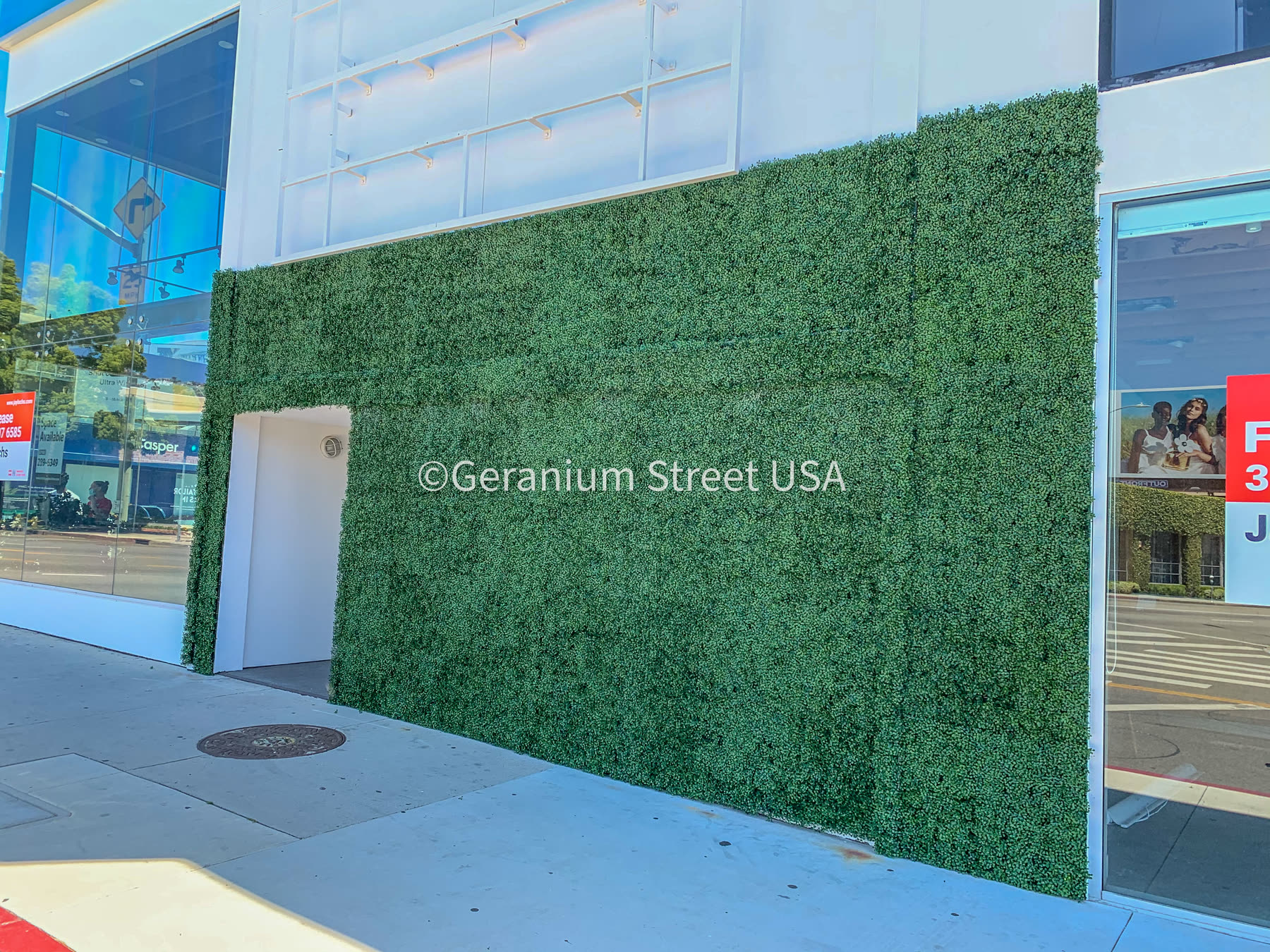
A green wall near the entrance draws attention from the street and creates an immediate sense that the space is curated and intentional. Retail environments compete for attention, and a living wall is a visual anchor.
Photo opportunities
Retail stores increasingly design spaces for customer photography. A living wall with good lighting creates a backdrop that customers photograph and share on social media—free, organic marketing for the store.
Product display integration
Some retailers integrate green walls with product displays, shelving, or signage. The foliage creates a natural frame around products and adds visual warmth to what might otherwise be a sterile retail environment.
Pop-up and seasonal installations
Artificial living walls are easy to install and remove, making them practical for pop-up shops, seasonal displays, and temporary retail environments. Try doing that with a live planted wall.
Why artificial makes sense for commercial biophilic design
The arguments for artificial over live in commercial settings are practical:
No irrigation system. A live wall in an office or retail space requires a plumbing connection, a reservoir, pumps, and ongoing water management. Leaks happen. Equipment fails. The facilities team adds another system to maintain.
No plant replacement. Live wall plants die—from light changes, HVAC disruption, pest issues, or simple neglect. Replacing dead sections is expensive and the patchy look between replacements undermines the whole point.
No pest risk. Soil and moisture attract insects. In a restaurant, hotel, or food-adjacent retail environment, that's a non-starter.
Consistent appearance. An artificial wall looks the same on a Monday morning in January as it does on a Friday afternoon in August. Live walls fluctuate with seasons, light conditions, and maintenance quality.
Lower total cost. The upfront cost of an artificial wall may be comparable to or higher than a live wall of similar size. But the ongoing costs—no irrigation, no plant replacement, no specialized horticultural maintenance—make the total cost of ownership significantly lower over a typical commercial lease term.
Fire-rated options. For commercial interiors that require fire-rated decorative materials, artificial walls tested to NFPA 701 are available. Live planted walls don't face this issue (live plants don't burn the same way), but the irrigation and maintenance trade-offs remain.
Getting the details right
A green wall that looks cheap undermines the biophilic design intent. A few details make the difference:
Foliage quality. Use panels with mixed foliage types, varied leaf sizes, and multiple shades of green. Uniform single-species panels look flat, especially indoors where people see the wall up close.
Lighting. This cannot be overstated for indoor installations. Warm LED uplighting or wall-washing makes the foliage look rich and dimensional. Cool fluorescent overhead light makes everything look flat and obviously artificial.
Scale. A small accent panel can work, but the impact increases with scale. A full wall reads as an intentional design element. A small patch reads as an afterthought.
Maintenance. Even artificial walls need periodic dusting and cleaning—especially in restaurants and kitchens where grease accumulates. Plan for regular cleaning to keep the wall looking fresh.
Related articles
This article is part of our complete guide to artificial living walls in Texas, which covers materials, applications, installation, and maintenance.
You might also find these useful:
For commercial products, see our commercial living wall page or Vallum FRX system.
FAQ
What is biophilic design?
Biophilic design is an approach to architecture and interior design that incorporates natural elements—plants, water, natural light, natural materials, and organic shapes—into built environments. The goal is to maintain a connection to nature in spaces where people spend most of their time, based on research showing that exposure to natural elements improves wellbeing and cognitive performance.
Do artificial plants provide the same biophilic benefits as real plants?
Research suggests that visual exposure to greenery—whether real or artificial—provides stress reduction and perceived wellness benefits. Real plants offer additional benefits like air quality improvement that artificial plants do not. However, the visual and psychological response to greenery in a space appears to be driven primarily by the presence and appearance of the greenery, not whether it is biologically alive.
Where should I place an artificial green wall in an office?
The most effective placements are in high-visibility, high-traffic areas: the reception or lobby, behind the main seating area in a coworking space, in break rooms or kitchen areas, along hallways, and as a backdrop in conference rooms or video call areas. Place the wall where the most people will see it and benefit from it daily.
How much does an artificial green wall cost for an office?
Costs vary significantly based on the size of the wall, the product selected, the mounting system, and whether professional installation is needed. Contact us for a quote specific to your space. The ongoing cost advantage is clear: artificial walls require no irrigation, no fertilizer, no plant replacement, and no specialized maintenance staff.
References
- Human Spaces Global Report — The Global Impact of Biophilic Design in the Workplace: https://humanspaces.com/global-report/
- NFPA 701: https://www.nfpa.org/codes-and-standards/nfpa-701-standard-development/701
Need a next step?
Planning a similar Texas project?
Use this article for research, then send your dimensions, city, and photos if you want a useful next step.
Ready for the next step?
Use the page that fits your project best
Pick the shortest path based on whether you need pricing, a service page, or a local planning page.