One of the biggest selling points of artificial hedges is low maintenance. And that's true—compared to a live hedge that needs trimming, watering, fertilizing, and pest treatment, artificial panels are dramatically easier to care for.
But low maintenance isn't zero maintenance. Texas outdoor conditions—dust, pollen, UV, pool chemicals, and heat—do affect artificial hedges over time. A small amount of regular care keeps them looking good and extends their lifespan significantly.
Planning a similar project? See artificial hedge installs →.
This is the complete care guide for Texas homeowners.
Routine cleaning
The basic rinse
The simplest and most important maintenance task: rinse your artificial hedges with a garden hose every 2 to 3 months. This removes the dust, pollen, and airborne debris that settle on the foliage and can dull the appearance over time.
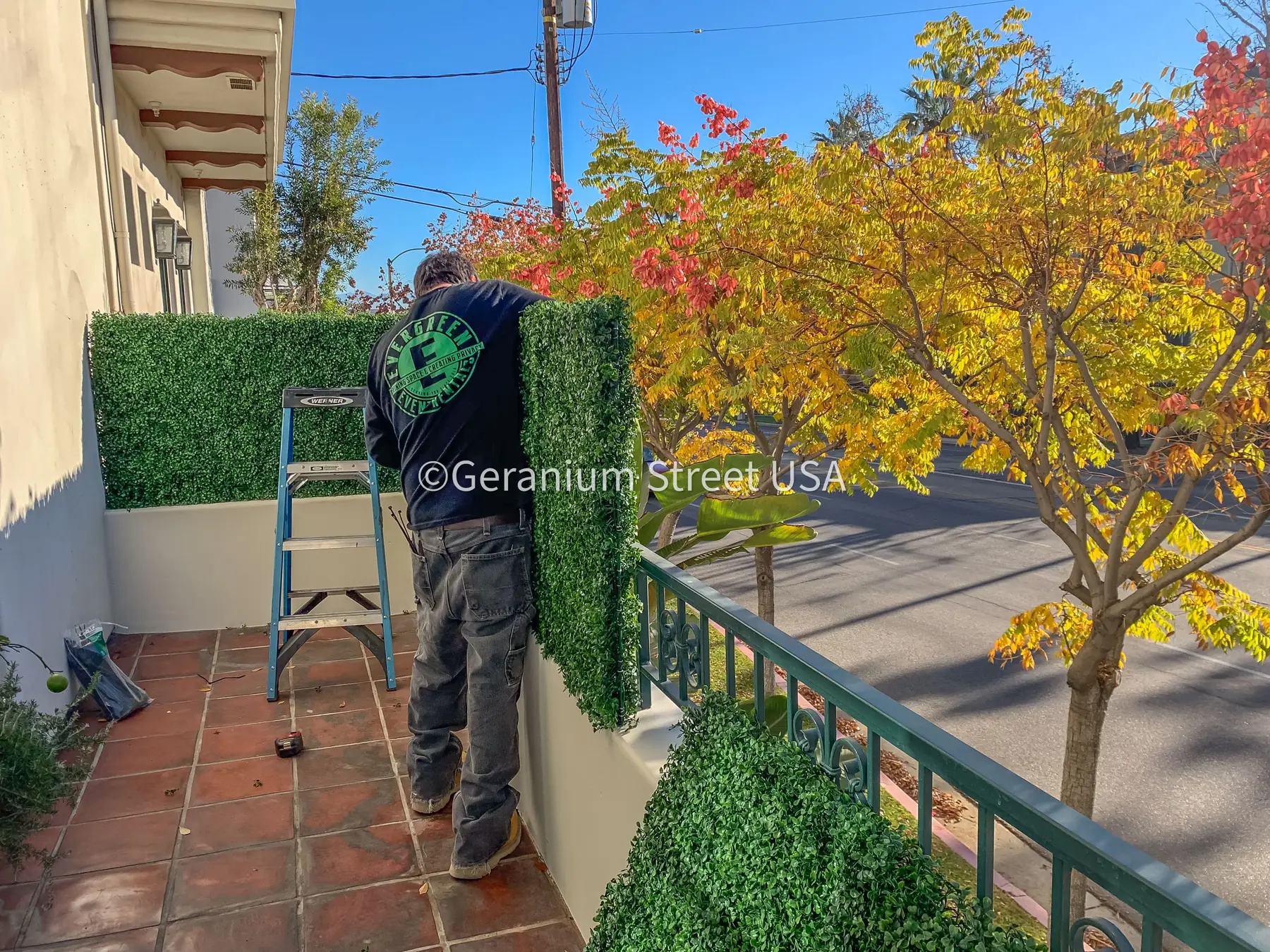
In Central Texas, cedar pollen season (December through March) deposits a visible yellow film on outdoor surfaces. A hose rinse after the worst of pollen season clears the buildup.
How to do it:
- Use a standard garden hose with a spray nozzle
- Spray top to bottom so debris washes downward
- Work in sections along the fence or wall
- Pay attention to the lower sections where dirt splashes up from the ground
That's it for routine cleaning. Most of the time, water alone is sufficient.
Deeper cleaning with soap
If dust and grime have built up beyond what a hose rinse handles—or if you're dealing with specific residue like pool chemicals, sunscreen, or cooking grease—a mild soap wash does the job.
What to use:
- A few drops of mild dish soap in a bucket of warm water
- A soft-bristle brush (a car wash brush works well) or a soft cloth
- A garden hose for rinsing
Process:
- Rinse the section with the hose first to remove loose debris
- Apply the soap solution with the brush, working it gently into the foliage
- Let it sit for a minute or two on stubborn spots
- Rinse thoroughly with the hose
- Allow to air dry
Cleaning near pools
Pool-adjacent hedges collect a film from chlorine mist, sunscreen, body oils, and airborne dust. On many outdoor-rated panels, that buildup affects appearance more than anything else, but product quality varies and routine cleaning still matters.
Clean pool-area hedges monthly during swimming season. The soap-and-water method above handles the buildup. If you stay on top of it, the film never gets heavy enough to be a problem.
For more on pool-area hedge care, see our pool privacy guide.
Cleaning near kitchens and grills
Outdoor kitchens and grills produce grease and smoke that coat nearby surfaces. If your artificial hedge is near a cooking area, expect to clean it more frequently—monthly or after heavy use.
The soap-and-water method works for grease buildup. For stubborn grease spots, apply the soap solution directly, let it sit for 5 minutes, and scrub gently with a soft brush before rinsing.
What NOT to use
Planning a similar project?
Use these next pages while you read
They cover pricing, service details, and the next planning step without making you leave the article blind.
Pressure washers. The high-pressure spray strips UV coatings from the foliage, damages the texture that makes panels look realistic, and can force water behind the panels where it causes mold on the mounting surface. A garden hose is all you need.
Bleach. Bleach degrades polyethylene and can cause discoloration. It also strips UV stabilizers, which shortens lifespan.
Ammonia-based cleaners. Similar issues to bleach—polymer degradation and UV stabilizer damage.
Solvents and degreasers. Industrial cleaners, acetone, and harsh degreasers attack the polymer surface. Mild dish soap handles anything you'll encounter on residential hedges.
Abrasive pads or wire brushes. These scratch the foliage surface, creating dull spots and accelerating UV damage where the surface is compromised.
WD-40 or silicone sprays. Sometimes suggested online as a way to "restore" faded panels. These create a temporary sheen but attract more dust, leave a residue, and don't address the underlying UV degradation.
Seasonal inspection
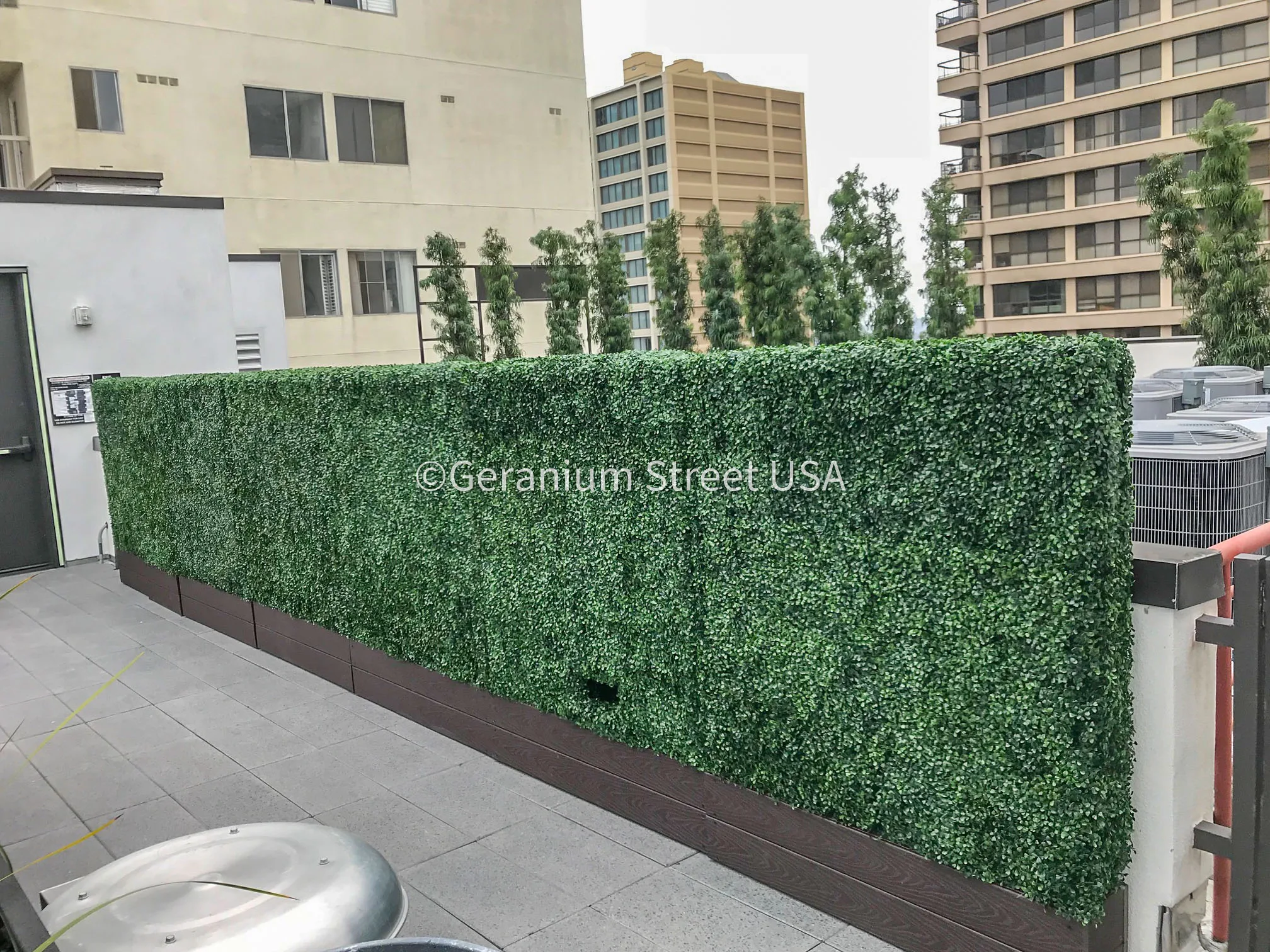
Once a year—early spring is ideal, before the intense Texas summer—do a walk-along inspection of your hedge installation.
What to check
Fasteners. Look for loose, broken, or missing zip ties and screws. Texas heat causes thermal expansion and contraction that can loosen fasteners over time. UV-rated zip ties last longer than standard ones, but even UV-rated ties eventually degrade. Replace any that are cracked, stretched, or broken.
Panel alignment. Have any panels shifted? High winds, impacts from lawn equipment, or thermal movement can push panels out of alignment. Straighten any sections that have gaps or overlap unevenly.
Panel condition. Look for early signs of wear: color fading, brittleness (leaves that snap instead of flex), or leaf shedding. If one section is noticeably more faded than the rest—usually the section that gets the most direct sun—plan to replace that panel before it affects the overall look. See our durability guide for more on what to expect.
Mounting surface. Check the fence or wall behind the panels. Is it still solid? Any new leaning, rot, or damage? The hedge panels can mask problems developing in the fence underneath.
Drainage. Make sure the bottom edge of the panels isn't sitting in standing water or blocking drainage paths. Pooled water against the base of the panels promotes mold and can undermine the mounting surface.
Access points. Verify that panels near hose bibs, electrical panels, cleanouts, and gates still provide the access they're supposed to. If a panel has shifted to block an access point, reposition it.
After storms
Texas sees significant wind events, hail, and occasionally ice storms. After any major weather event, do a quick visual check:
- Panels still secure and aligned?
- Any foliage damage from hail or debris?
- Fasteners intact?
- Mounting surface still stable?
Most of the time, properly installed panels weather storms without issues. But a 5-minute check after a storm catches problems early.
Dealing with specific Texas conditions
Cedar pollen (Central Texas)
The yellow-green film from mountain cedar pollen coats everything outdoors from December through March. It washes off easily with a hose—just wait until the worst of the season passes so you're not cleaning every week.
Red clay dust (East Texas)
Red clay dust can stain lighter foliage if left to sit for extended periods. Rinse more frequently if you're in a red clay area, especially after dry windy stretches.
Salt air (Gulf Coast)
Properties near the Gulf Coast deal with salt in the air, which can leave a residue on outdoor surfaces. Salt residue washes off with a hose rinse. The bigger concern is corrosion on metal fasteners—use stainless steel hardware in coastal areas.
Hard water mineral deposits
If your hose water is hard (high mineral content, common in many Texas areas), you may notice white mineral spots after cleaning. These are cosmetic and wash off with a vinegar-water solution (one part white vinegar to four parts water). Rinse with clean water afterward.
When to replace panels
Artificial hedges don't fail all at once. Degradation is gradual and usually affects the most sun-exposed sections first. Here's when to act:
- Minor fading on one section: Not urgent. Monitor it and plan replacement when the contrast with adjacent panels becomes noticeable.
- Leaves becoming brittle and snapping: The UV stabilizers are spent. Replace that panel before leaves start shedding onto the ground.
- Active leaf shedding: Replace promptly. Loose leaves create debris and the bare spots are visible.
- Backing grid softening or crumbling: End of life for that panel. Replace it.
The good news: modular panel systems allow individual panel replacement without disturbing the rest of the installation.
Related articles
This article is part of our complete guide to artificial hedges in Texas, which covers types, materials, climate performance, costs, and more.
You might also find these useful:
For product options, see our artificial hedge page or boxwood hedge page.
FAQ
How often should I clean artificial hedges in Texas?
For most outdoor installations, a garden hose rinse every 2 to 3 months is sufficient. Near pools, increase to monthly because of chlorine and sunscreen buildup. Near roads or construction, rinse more often due to dust. Indoor artificial hedges only need dusting every few months.
Can I pressure wash artificial hedges?
No. Pressure washers can strip UV coatings, damage foliage texture, and force water behind panels where it can cause mold on the mounting surface. A garden hose with a standard spray nozzle provides plenty of cleaning power.
What cleaning products are safe for artificial hedges?
Mild dish soap diluted in water is the safest and most effective cleaner. Avoid bleach, solvents, ammonia-based cleaners, and abrasive products. These can degrade the polymer surface, strip UV stabilizers, and shorten the lifespan of the panels.
Do artificial hedges need any seasonal maintenance?
An annual inspection of fasteners and panel condition is the main seasonal task. Check for loose zip ties or screws, panels that have shifted, and any sections showing early signs of wear. In Texas, the best time for this is early spring before the intense summer UV and heat season.
Need a next step?
Planning a similar Texas project?
Use this article for research, then send your dimensions, city, and photos if you want a useful next step.
Ready for the next step?
Use the page that fits your project best
Pick the shortest path based on whether you need pricing, a service page, or a local planning page.