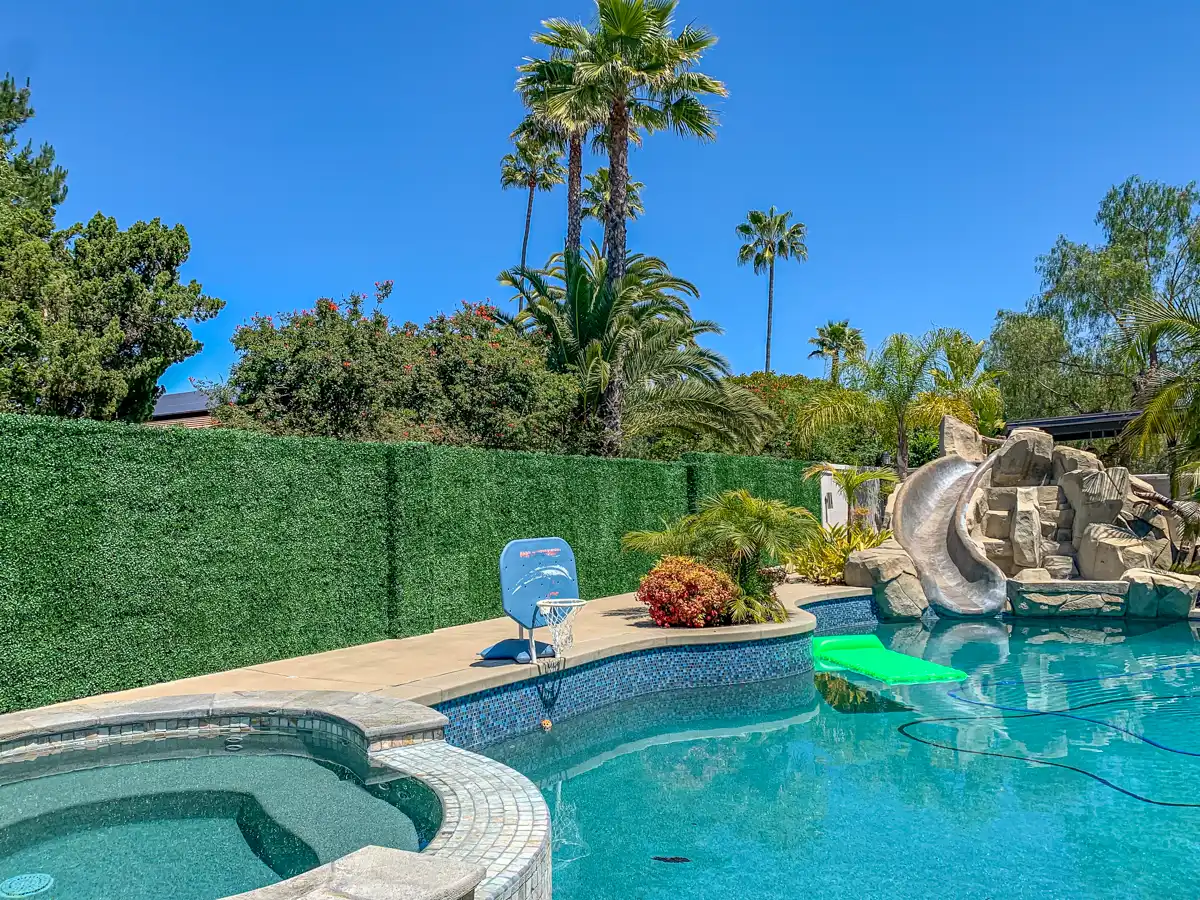
Pool privacy is one of the most common reasons Texas homeowners look into artificial hedges. The backyard pool is supposed to be a retreat, but between close neighbors, two-story houses, and fences that top out at six feet, the privacy often isn't there.
Real hedges around pools come with a long list of problems: leaves in the water, root systems that can damage pool plumbing, insects, constant watering during months when the pool is in daily use, and the reality that anything planted next to a pool deck gets hammered by reflected UV and chlorine mist. Most live hedges don't hold up.
Planning a similar project? See pool privacy screens →.
Artificial hedges solve the privacy problem instantly—full coverage on day one, no debris in the water, and no irrigation. But there are specific considerations for pool installations that don't apply to a standard fence-line hedge. This guide covers what you need to know.
Pool barrier codes: what the fence underneath must do
Before talking about privacy screening, let's be clear about the structural requirements. Pool barriers in residential construction are governed by building codes, and artificial hedge panels are not a substitute for a code-compliant fence or barrier.
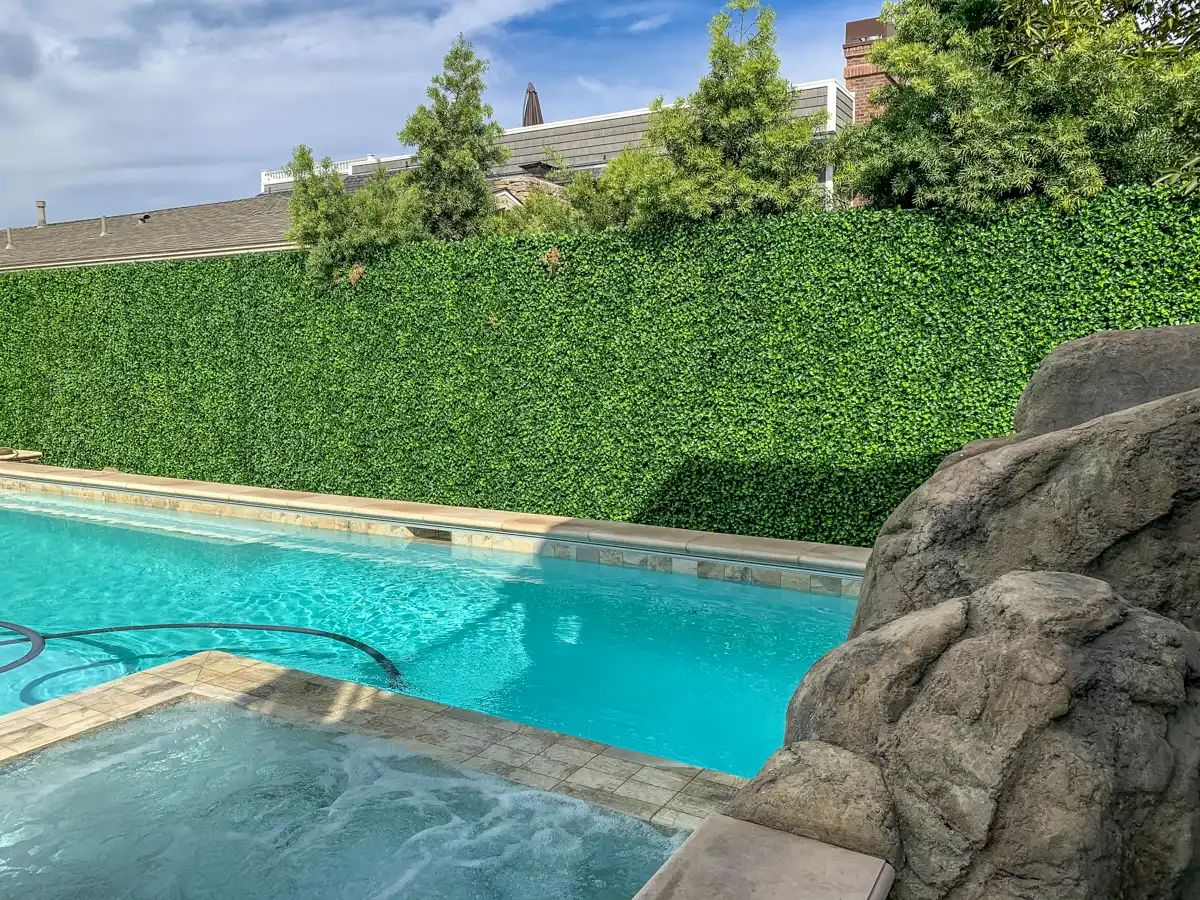
The International Residential Code (IRC), which Texas largely adopts, requires pool barriers to meet specific standards:
- Minimum height of 48 inches (4 feet), measured from the exterior grade to the top of the barrier.
- Maximum gap of 2 inches between the bottom of the barrier and the ground.
- Gates must be self-closing and self-latching, and must open outward (away from the pool).
- Gate latches on the pool side must be at least 54 inches above the ground surface when the release mechanism is accessed from the non-pool side.
- The barrier must resist climbing—openings in the fence must not allow a 4-inch sphere to pass through.
Texas cities adopt these codes with local amendments, so requirements may vary. Check with your city's building inspection department for the exact standards in your jurisdiction.
The key point: your pool fence must meet barrier code requirements on its own. Artificial hedge panels are a privacy enhancement added to a compliant fence, not a replacement for the fence itself.
Why artificial hedges work well around pools
Planning a similar project?
Use these next pages while you read
They cover pricing, service details, and the next planning step without making you leave the article blind.
Once the fence is handled, the privacy screening conversation becomes simpler. Here's why artificial hedges are a natural fit for pool areas:
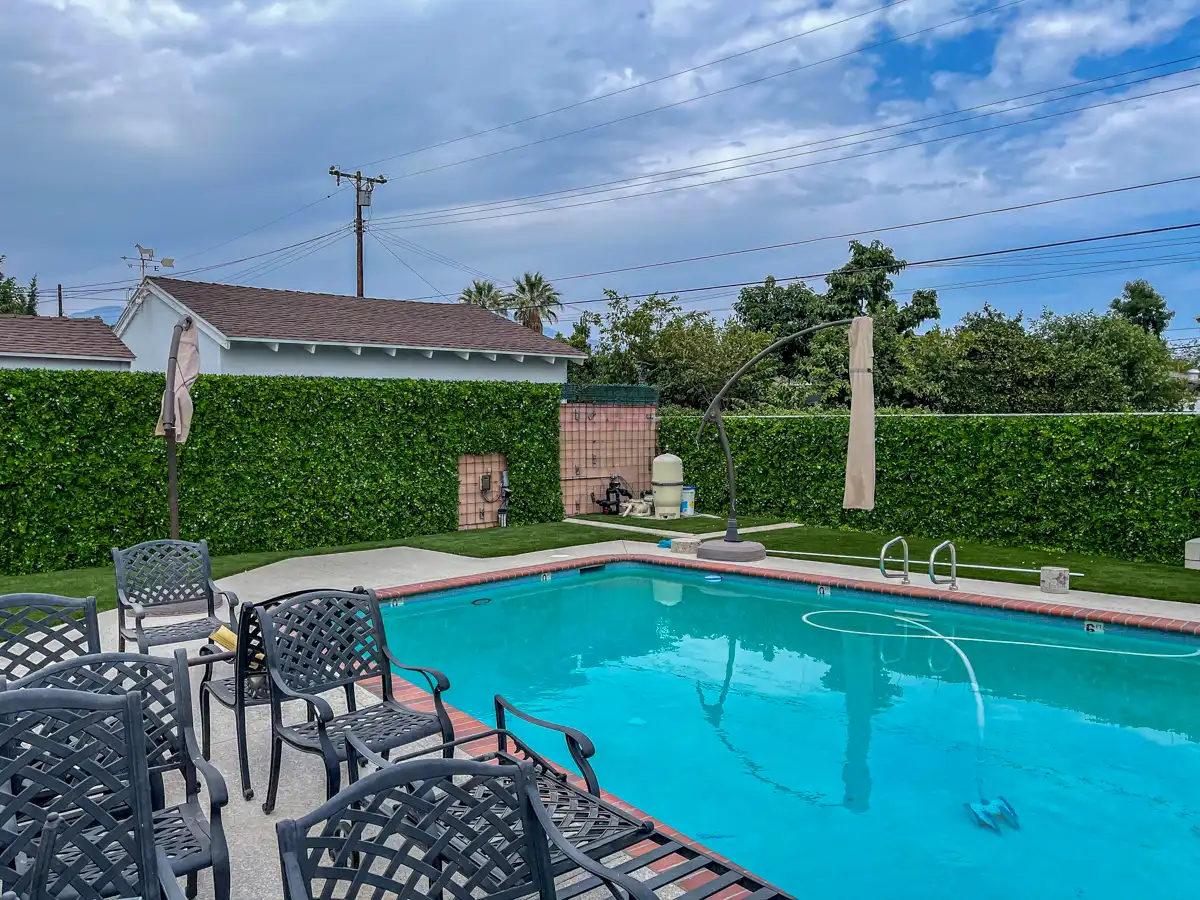
No debris in the water. Live hedges drop leaves, flowers, seeds, and insects into the pool, clogging skimmers and adding to chemical demand. Artificial panels don't shed anything.
No root intrusion. Real hedge root systems can grow toward pool plumbing, deck joints, and foundation elements. Artificial hedges have no root system to cause damage.
No irrigation near the pool deck. Live hedges next to a pool require irrigation, which means sprinkler overspray on the deck (slip hazard), moisture under the deck (mold and erosion), and another system to maintain. Artificial hedges need zero water.
No insects. Live vegetation near standing water is an invitation for mosquitoes and other insects. Artificial hedges don't hold moisture or create habitat. According to the EPA's mosquito prevention guidance, eliminating standing water and moist vegetation near living areas is a primary control method.
Consistent appearance. Pool areas are where you host people, take photos, and relax. A live hedge that's brown in August or patchy after a freeze isn't the backdrop you want. Artificial hedges look the same year-round.
Material considerations for pool environments
Pool areas add environmental factors that standard fence-line installations don't face:
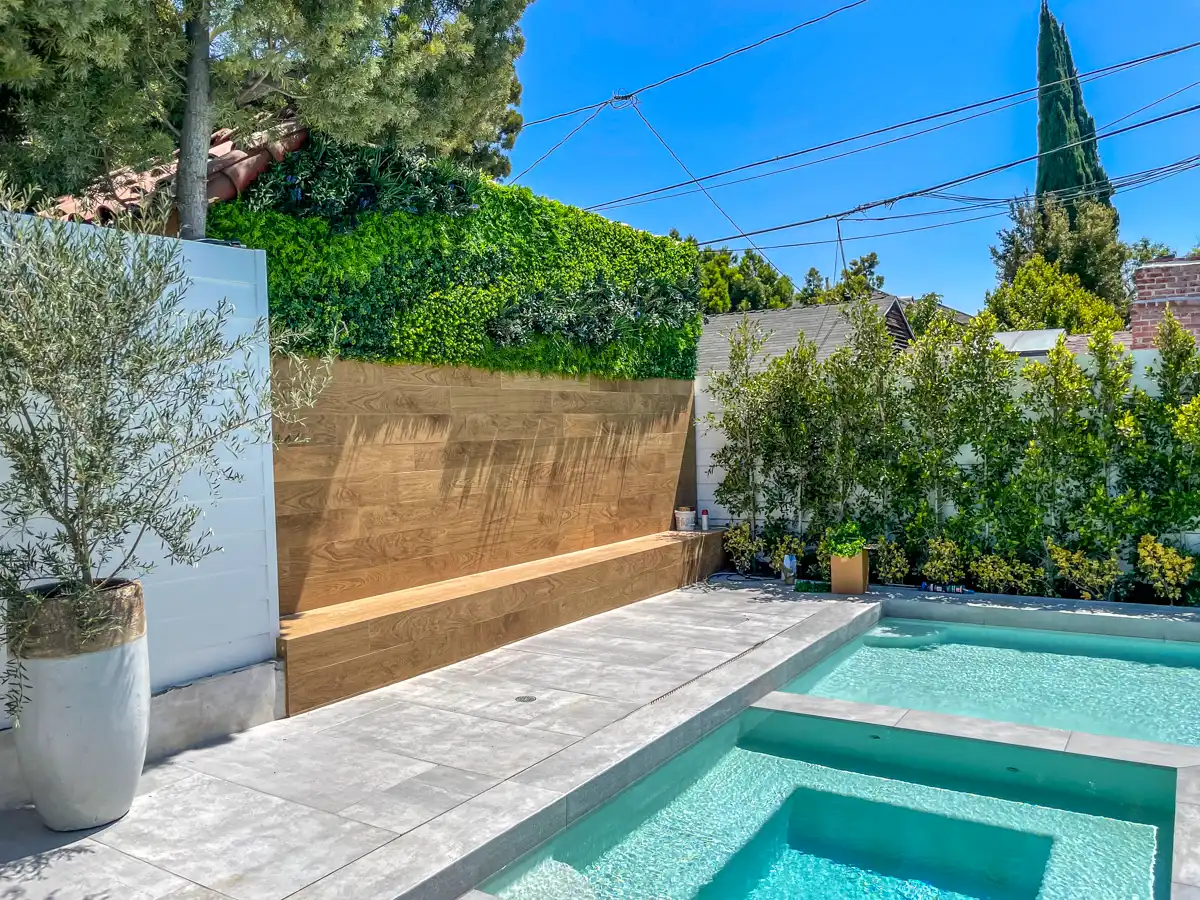
Reflected UV
Water acts as a mirror for ultraviolet light. Panels near a pool receive direct UV from above and reflected UV bouncing off the water surface. This accelerated UV exposure means you want the best UV-stabilized panels available—not the budget option.
Chlorine and chemical exposure
Chlorinated pool water creates a fine mist that lands on nearby surfaces. Over weeks and months, this mist—combined with sunscreen, body oils, and airborne dust—creates a film on artificial hedge panels. The film doesn't damage quality polyethylene panels, but it dulls the appearance.
The solution is periodic rinsing. A garden hose with mild dish soap handles the buildup. For stubborn residue, a soft brush helps. Avoid pressure washers and harsh chemicals near the panels.
Heat from pool deck surfaces
Concrete, travertine, and stone pool decks absorb and radiate heat. Panels mounted near these surfaces face higher ambient temperatures than a standard fence line. The same air-gap principle applies: mounting panels with even a small gap behind them allows heat to dissipate rather than getting trapped against the panel backing.
Splash zone
If the hedge is within splashing distance of the pool—near a diving board, slide, or spa overflow—the panels will get wet regularly. That's fine for the material (polyethylene handles water), but the constant wetting and drying cycle can leave mineral deposits if your water is hard. Periodic rinsing prevents buildup.
Common pool privacy configurations
Fence-line privacy screening
The most common setup: artificial hedge panels attached to the existing perimeter fence to add density and block sightlines. If your fence is wood or metal at 6 feet tall, but the neighbor's second-story windows look directly into the pool area, hedge panels on the pool-side of the fence fill the gaps and add visual mass.
This works especially well on:
- Wood privacy fences with gaps between boards
- Wrought iron or aluminum fences that meet barrier code but offer no privacy
- Chain-link fences that are structurally sound but visually unattractive
Fence height extensions
If 6 feet of fence isn't enough, a hedge topper adds height without building a taller fence. A 2-foot hedge topper on a 6-foot fence gives you 8 feet of screening—often enough to block second-story sightlines.
Check your city's fence height ordinance and your HOA's CC&Rs before adding height. Many Texas cities allow 8-foot fences in backyards. For guidance on HOA approval, see our HOA approval guide for artificial hedges.
For product options, see our fence extension page.
Pool equipment screening
Pool pumps, filters, heaters, and automation panels are functional but ugly. An artificial hedge screen hides them from view while keeping the area accessible for maintenance.
The critical rule: don't block airflow to equipment that needs it. Pool heaters, heat pumps, and some filter systems require air circulation. Mount the screen far enough away—or use a frame with clearance—so equipment can breathe. And leave a removable panel or access door for the equipment you service regularly.
Freestanding privacy walls
For pool areas where the fence line is too far away to provide privacy at the pool deck itself—large lots, for example—a freestanding privacy screen closer to the pool seating area can be more effective than extending the perimeter fence.
These use a post-and-frame system with hedge panels attached to the frame. They can be positioned exactly where privacy is needed: behind the lounge chairs, next to the outdoor kitchen, or between the pool and a guest house.
Installation tips specific to pool areas
- Use stainless steel or coated fasteners. The combination of chlorine mist, humidity, and heat near a pool corrodes cheap hardware quickly. Spend the extra money on corrosion-resistant fasteners.
- Protect the pool during installation. If you're drilling, cutting, or fastening near the pool, cover the water surface. Metal filings, screw fragments, and debris in the pool create problems for the filter and can stain the finish.
- Plan drainage. Don't mount panels in a way that blocks water from draining off the deck. Pool decks are sloped to drain, and a hedge panel at grade level can create a dam if the bottom edge sits on the deck surface.
- Consider lighting. Pool areas often have landscape lighting. Uplights or string lights behind or above an artificial hedge can create a warm, layered look at night. Plan the lighting before the hedge goes up so you can run low-voltage wiring behind the panels.
Related articles
This article is part of our complete guide to artificial hedges in Texas, which covers types, materials, climate performance, costs, and more.
You might also find these useful:
- How to get HOA approval for artificial hedges in Texas
- Artificial hedges vs. real plants in Texas: which is cheaper?
For pool-specific products, see our pool privacy hedge page or pool living wall page.
FAQ
Can artificial hedges serve as a pool barrier fence in Texas?
Artificial hedge panels alone typically do not meet pool barrier code requirements because they may not provide the structural rigidity, climb resistance, and gate latching that building codes require. However, artificial hedges can be added to an existing code-compliant fence to increase privacy and improve appearance. The underlying fence structure must still meet all applicable barrier requirements.
Will chlorine damage artificial hedges?
Pool areas add chlorine mist, sunscreen, and dust to nearby surfaces. Outdoor-rated hedge panels can still be a good fit there, but product quality and routine rinsing matter. Avoid leaving chemical concentrate in direct contact with the panels.
How close to the pool can I install artificial hedges?
There is no specific setback requirement for decorative elements near pools, but keep panels far enough away that they do not interfere with pool circulation, equipment access, or the required pool barrier. A few feet of clearance between the hedge and the water's edge also makes cleaning easier.
Do artificial hedges attract mosquitoes near pools?
No. Artificial hedges do not hold standing water and do not create the moist soil conditions that attract mosquitoes. This is an advantage over live hedges, which can trap moisture and create habitat for insects near pool areas.
References
- International Residential Code, Chapter 42 (Swimming Pools): https://codes.iccsafe.org/content/IRC2018/chapter-42-swimming-pools
- EPA Mosquito Control: https://www.epa.gov/mosquitocontrol
Need a next step?
Planning a similar Texas project?
Use this article for research, then send your dimensions, city, and photos if you want a useful next step.
Ready for the next step?
Use the page that fits your project best
Pick the shortest path based on whether you need pricing, a service page, or a local planning page.