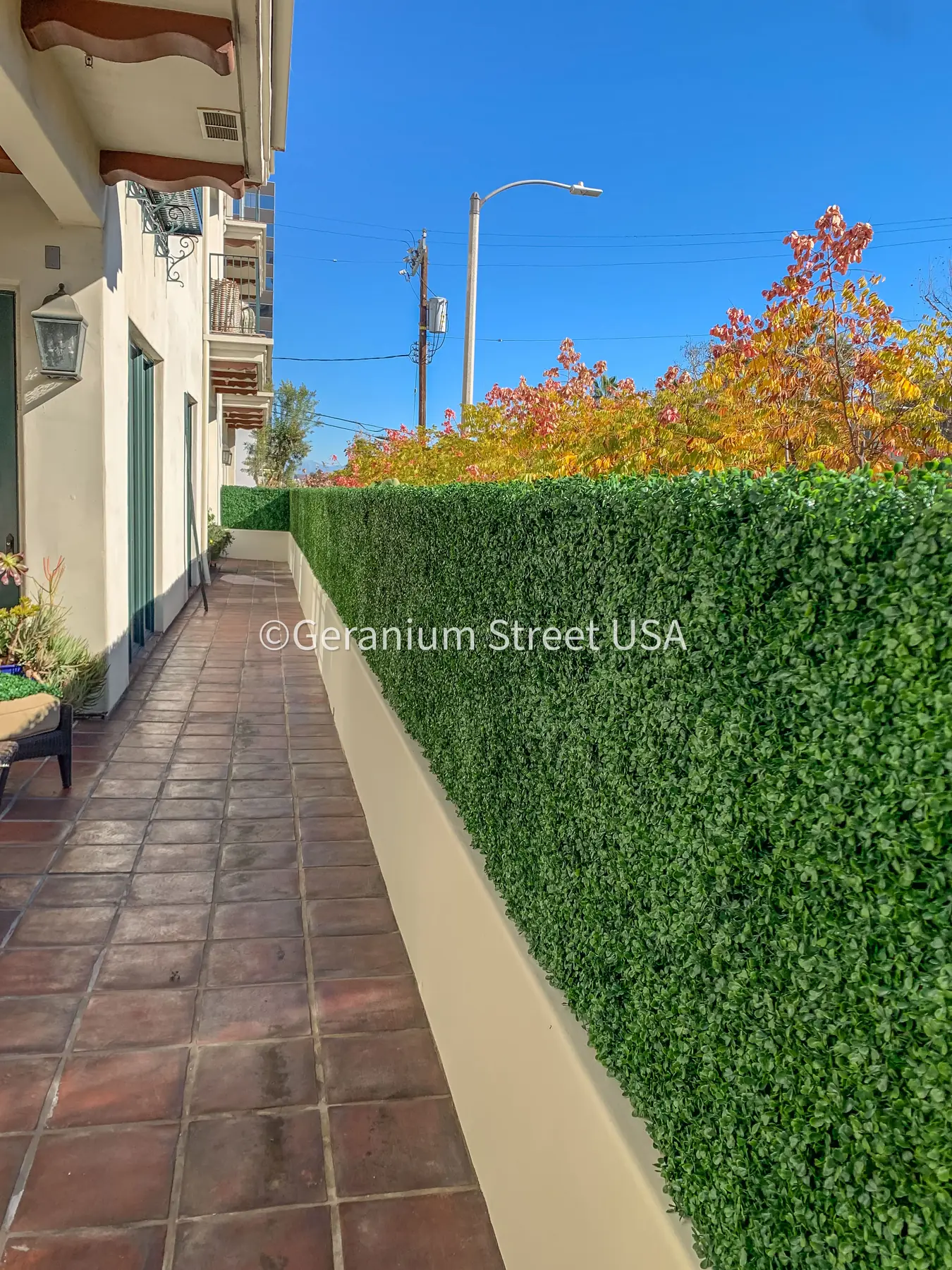
It's the first question most Texas homeowners ask before buying artificial hedges: how long will they actually last? And it's a fair question, because Texas isn't gentle on anything you put outside. The UV exposure here is aggressive, the heat is relentless for months at a time, and the temperature swings between seasons stress every material differently.
The short answer: a quality UV-stabilized artificial hedge installed in Texas can hold its appearance for years outdoors, but the result varies with sun exposure, product quality, placement, and maintenance. The difference comes down to four things: the material, the UV treatment, where you put it, and whether you do basic maintenance.
Planning a similar project? See artificial hedge installs →.
This article breaks down each factor so you know what to expect—and what to look for when choosing a product.
The material matters more than anything
Artificial hedges are made from polymers—plastics, essentially. But not all plastics behave the same way in sun and heat.
Polyethylene (PE)
Polyethylene is the standard material for quality outdoor artificial greenery. It's the same polymer family used in outdoor furniture, playground equipment, and agricultural films—all applications where UV exposure is constant.
PE handles heat well, resists brittleness, holds color longer than most alternatives, and feels more realistic to the touch. When you see "UV-stabilized" on a product spec sheet, the base material is almost always PE.
PVC (polyvinyl chloride)
PVC is cheaper to manufacture and shows up in budget artificial greenery. It's stiffer than PE, feels less realistic, and—critically—degrades faster under UV exposure. PVC panels in direct Texas sun can become brittle, discolor, and start shedding leaves within a few years.
If the product doesn't specify the material, or if it's significantly cheaper than comparable options, it's likely PVC or a PVC blend.
Silk and fabric blends
Some artificial plants use silk or fabric elements for a more natural look. These are fine indoors but have no place outdoors in Texas. Fabric fades fast, absorbs moisture, and breaks down quickly in heat and UV.
Bottom line: For outdoor use in Texas, you want polyethylene with UV stabilization. Everything else is a compromise on lifespan.
How UV stabilization works
Planning a similar project?
Use these next pages while you read
They cover pricing, service details, and the next planning step without making you leave the article blind.
UV radiation from the sun breaks down polymer chains over time. This is what causes fading, brittleness, and eventual material failure in any plastic product left outdoors.
UV stabilizers are chemical additives blended into the polymer during manufacturing. They work by absorbing or deflecting UV radiation before it can damage the polymer chains. Common UV stabilizer types include HALS (hindered amine light stabilizers) and UV absorbers like benzotriazoles.
The quality and concentration of UV stabilizers directly affects how long the product resists degradation. Higher-quality products use more stabilizer and better formulations. Budget products cut costs here first—and you see the results within a couple of years.
What to look for: A product spec sheet should mention UV stabilization. If it doesn't, ask. If the vendor can't answer, consider that a red flag.
Placement is the second biggest factor
The same panel will last significantly different amounts of time depending on where you install it. In Texas, sun orientation is the dominant variable.
North-facing installations
North-facing fences and walls receive the least direct sun. Panels here get mostly indirect and ambient light, which puts far less stress on the material. This is the easiest placement for longevity—expect the upper end of the lifespan range.
East-facing installations
East-facing surfaces get morning sun, which is less intense than afternoon sun. These installations do well and experience moderate UV stress.
South-facing installations
South-facing surfaces receive consistent sun exposure throughout the day. This is more demanding than north or east, but still manageable for quality UV-stabilized panels.
West-facing installations
West-facing surfaces get the hardest hit: direct afternoon sun during the hottest part of the day. In Texas summers, west-facing walls can see surface temperatures well above ambient air temperature because the wall absorbs and radiates heat. This combination of intense UV and heat is the most punishing placement for any artificial greenery.
For west-facing installations, use the best UV-rated panels available and mount them with an air gap behind to let heat escape rather than build up between the panel and the wall or fence.
Shaded and covered areas
Panels under a patio cover, pergola, or tree canopy last the longest because they're protected from direct UV. If your installation is mostly shaded, lifespan extends well beyond the typical outdoor range.
Heat: what it does and doesn't do
Texas heat alone doesn't destroy artificial hedges. Quality polyethylene is rated for temperatures well above what Texas summers produce. The issue isn't the temperature—it's what heat does in combination with UV.
Heat accelerates UV degradation. A panel at 140°F surface temperature on a west-facing wall degrades faster than the same panel at 100°F on a north-facing fence, even if the UV exposure hours are similar.
Heat also affects mounting hardware. Metal fasteners expand and contract with temperature swings. Cheap zip ties can become brittle in heat and snap. Adhesives can soften on hot days and fail over time.
What helps:
- An air gap between the panel and the mounting surface prevents heat from getting trapped behind the panel
- Stainless steel or coated fasteners resist heat cycling better than bare steel
- UV-rated zip ties (if used) hold up longer than standard nylon ties
What shortens lifespan
Beyond material quality and placement, a few common mistakes accelerate wear:
Pressure washing. High-pressure water strips UV coatings and damages foliage texture. A garden hose with mild soap is all you need.
Harsh chemicals. Bleach, solvents, and aggressive cleaners can degrade the polymer surface and strip UV stabilizers. Stick to mild dish soap.
Trapped moisture. Panels mounted flush against a surface with no air gap can trap moisture behind them. In humid Texas conditions, this promotes mold on the mounting surface and can accelerate degradation of the panel backing.
Physical damage. Weed trimmers, lawn equipment, and impact damage create weak points where UV degradation accelerates. Trim carefully around panel edges.
Ignoring fasteners. A loose panel flaps in wind, stressing attachment points and creating gaps. Annual fastener checks take minutes and prevent bigger problems.
What extends lifespan
Choose quality material. UV-stabilized polyethylene from a reputable manufacturer is the foundation. This is not the place to save money.
Pick favorable placement when possible. If you have a choice between a north-facing and west-facing fence for the same privacy goal, the north-facing installation will last longer.
Maintain an air gap. Mount panels on a grid, furring strips, or standoffs rather than flush to the surface. This helps with both heat and moisture.
Rinse periodically. Dust, pollen, and grime build up on panels and can hold moisture and heat against the surface. A garden hose rinse every few months keeps panels cleaner and reduces surface stress. See our maintenance guide for details.
Replace individual panels when needed. If one panel starts to fade or show wear, replacing that section is far cheaper than redoing the entire installation. Most modular systems allow individual panel replacement.
When to expect replacement
There's no single expiration date. A quality installation on a north-facing fence in partial shade might look good for 12+ years. The same product on a fully exposed west-facing wall might start showing noticeable fading at year 6 or 7.
Signs that panels are reaching end of life:
- Noticeable color shift — greens turning yellow or gray
- Brittleness — leaves snap instead of flexing when touched
- Leaf shedding — individual leaves falling off the backing
- Backing deterioration — the grid becoming soft or crumbly
When you see these signs, it's time to plan replacement for that section. The good news: replacement is straightforward since the mounting infrastructure (fence, frame, hardware) is already in place.
Related articles
This article is part of our complete guide to artificial hedges in Texas, which covers types, materials, climate performance, costs, and more.
You might also find these useful:
- Artificial hedge maintenance and care for Texas homeowners
- Artificial hedges vs. real plants in Texas: which is cheaper?
For product options, see our artificial hedge page or UV-resistant boxwood hedge page.
FAQ
How many years do artificial hedges last outdoors in Texas?
Quality UV-stabilized artificial hedges can hold their appearance for years in Texas outdoor conditions. Lifespan depends primarily on sun exposure, material quality, mounting method, and basic maintenance.
Do artificial hedges fade in the sun?
All artificial greenery will experience some degree of color shift over years of direct UV exposure. UV-stabilized polyethylene panels resist fading significantly longer than unstabilized or PVC-based products. The rate of fading depends on the intensity and duration of sun exposure, which is why placement and material quality matter so much in Texas.
Can you replace individual panels instead of the whole hedge?
Yes. Most artificial hedge systems use modular panels that can be replaced individually. If one section fades or gets damaged, you can swap that panel without removing the entire installation. When ordering replacement panels, try to match the same product line and manufacturer to keep the appearance consistent.
Does heat damage artificial hedges?
Extreme heat alone does not typically damage quality polyethylene panels—PE handles temperatures well above what Texas summers produce. The issue is the combination of UV radiation and heat over time, which gradually breaks down polymer chains. Proper UV stabilization and an air gap behind the panels to prevent heat trapping are the best defenses.
Need a next step?
Planning a similar Texas project?
Use this article for research, then send your dimensions, city, and photos if you want a useful next step.
Ready for the next step?
Use the page that fits your project best
Pick the shortest path based on whether you need pricing, a service page, or a local planning page.