If you manage a multifamily property, you’ve probably had this conversation on repeat: residents want more privacy and a nicer-looking courtyard, leasing wants something that looks good in photos, and ownership wants fewer headaches than real landscaping. Artificial hedges can solve a lot of that quickly.
But there’s one piece you can’t gloss over: how it behaves in a fire—and whether you can prove what you installed.
Planning a similar project? See fire-rated hedge options →.
“Green wall” and “faux hedge” are marketing labels. Firewise decisions come down to what the product is made of, how it was tested, where it’s going, and what you can hand a city inspector or risk consultant without scrambling.
This is for property managers. Not designers, not catalog copy. Just the stuff that matters when you’re approving scope, reviewing submittals, and answering follow-up questions after a site walk.
Where artificial hedges fit in multifamily (and where things usually go sideways)
On multifamily sites, artificial hedges usually land in four places:
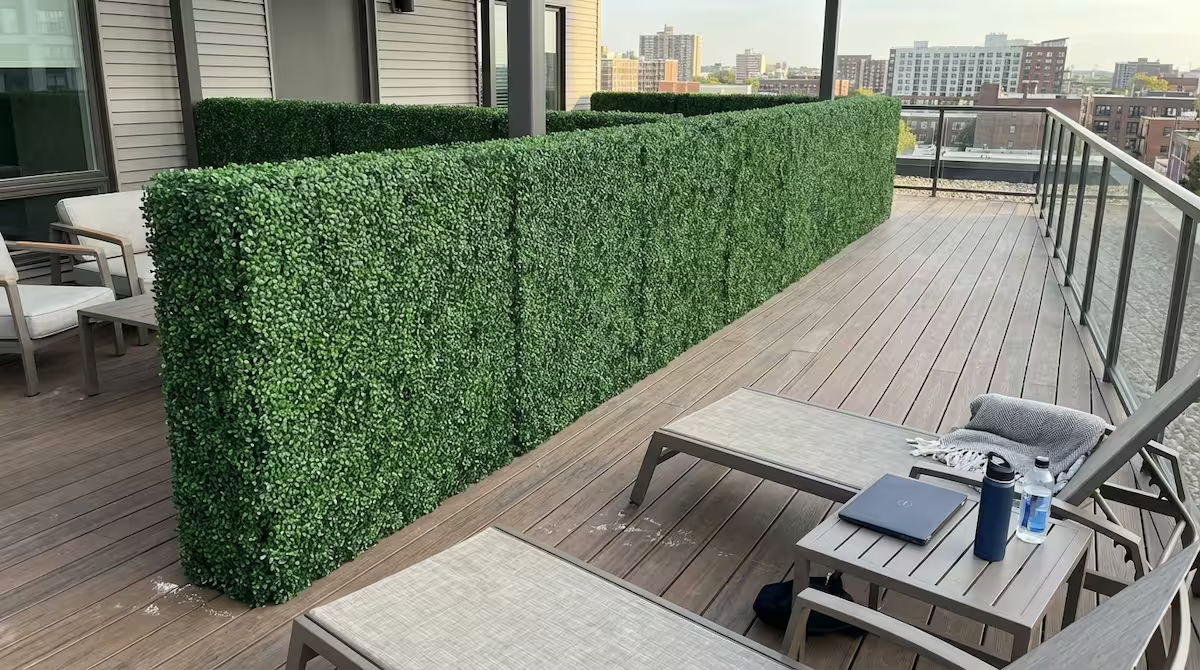
- Pool decks and courtyards (privacy screening, photo backdrop, hiding equipment)
- Perimeter fencing (blocking sightlines into patios and ground-floor units)
- Trash and service areas (cleaning up the look without adding irrigation)
- Retail-facing edges on mixed-use properties (tidier street frontage)
And the problems tend to repeat too:
- A vendor calls it “fire-rated,” but can’t produce an actual test report or certificate that matches the exact product.
- Panels get mounted right next to likely ignition sources (dumpsters, grills, smokers) because the goal was coverage, not risk control.
- Installers “Frankenstein” the system (mixing panels, backers, or adhesives), and the documentation no longer matches what’s on the wall.
- Teams assume “artificial” means “noncombustible.” It doesn’t. Most faux greenery is polymer-based.
So let’s get clear on what the labels do and don’t mean.
What “fire-rated” means (and what it doesn’t)
Planning a similar project?
Use these next pages while you read
They cover pricing, service details, and the next planning step without making you leave the article blind.
When a vendor says fire-rated artificial hedges, translate that into something you can verify.
A real “fire-rated” claim should come with documentation tied to a recognized fire test standard. For commercial and multifamily work, a common reference for artificial greenery is NFPA 701 (often listed as Method 1 or Method 2). Depending on the assembly and your jurisdiction, you may also see ASTM standards.
Two practical realities:
- A product can be tested, but that doesn’t automatically mean your installed assembly is covered. The mounting method and substrate can matter.
- “Fire-retardant” is not the same as “noncombustible.” It generally means it resists ignition or slows flame spread in test conditions. In a real fire, it may still melt, deform, and generate smoke.
You don’t need to turn into the fire marshal. You do need to collect the right paperwork and avoid the predictable install mistakes.
The paperwork property managers should ask for (and keep in the job folder)
If you’re reviewing bids or submittals, ask for this early. If a vendor drags their feet, take that for what it is.
1) A test report or certificate that names the product The document should match what’s being installed: product name, style, and ideally manufacturer and batch info. If the report is generic (“decorative vegetation sample”), assume it’s weak.
2) The test standard and method If it’s NFPA 701, the paperwork should spell out Method 1 or Method 2 and the result. If your city has a specific pathway for approvals, your installer may need to coordinate with the AHJ (Authority Having Jurisdiction).
3) Installation instructions How is it attached—mechanical fasteners, wire ties, a backer panel, adhesive? The moment the crew starts improvising, you can end up outside the tested configuration.
4) Fire-retardant treatment details (if applicable) Some products are inherently fire resistant; others depend on a topical treatment. If it’s a treatment, ask:
- Is it factory applied or field applied?
- Is there a recommended reapplication schedule?
- What can void the rating (pressure washing, harsh cleaners, UV degradation, etc.)?
5) A maintenance/cleaning guide This feels minor until someone power-washes the hedge with a degreaser and you’re left guessing what it did to the finish or the treatment.
Keep it all in a shared folder. People change roles; inspections don’t stop.
Firewise placement: avoiding ignition sources beats arguing about labels
Even if you’ve got documented fire rated artificial hedges, placement is where a lot of the real risk reduction happens.
Plain language: don’t put combustible decor next to the places most likely to start a fire.
On multifamily properties, that usually means:
- Grill zones (resident grills, community kitchens, smoker setups)
- Trash enclosures and compactor areas
- Loading/service corridors where cardboard stacks up
- Generator and mechanical areas with hot surfaces and fuel sources
- Smoking areas (even when policies exist)
If you’re using hedges to screen one of these zones, treat it like a constraint, not a quick fix: relocate the screen, pick a different material for that area, or use a noncombustible separation detail that your installer and local reviewer will accept.
And keep it straightforward. A planned screen wall with stand-offs and a noncombustible backer usually gets fewer questions than hedge panels zip-tied to whatever was already there.
Material reality check: UV, heat, and smoke are part of “firewise”
Texas sites add a twist: long sun exposure and heat cycling. Even if fire performance is the first filter, UV stability and heat tolerance drive what it looks like a year or two in.
- UV-stabilized polymers usually hold color longer and shed less.
- Cheaper panels can dry out, turn brittle, and start dropping leaves—then debris collects in corners and along fence lines.
- Near kitchens or grills, grease and smoke can stain panels and make cleaning miserable. And buildup isn’t just cosmetic; it can become fuel.
A firewise plan isn’t only “does it pass a test.” It’s “will this still look and behave acceptably two summers from now—or will it turn into a maintenance problem that adds risk.”
Installation details that matter (more than the pretty render)
Most artificial hedge issues on multifamily sites come from installation choices, not the sample the vendor brought to the office.
A few scope details that pay off:
Mechanical attachment beats mystery adhesives.
Adhesives are tempting for speed, but they’re tough to inspect and can fail in heat. If adhesive is part of the plan, require the exact product and method in writing—and make the installer own it.
Mind the substrate.
Mounting to wood fencing is common, but it’s still wood. If the hedge is going on or near combustible substrates, have the risk conversation before anyone starts drilling.
Plan for wind.
Courtyards and breezeways can act like wind tunnels. Loose panels flap, fasteners fatigue, and then you get gaps and sharp clips. Ask how seams are secured and where expansion is expected.
Leave access to what needs servicing.
If the hedge blocks hose bibs, electrical panels, irrigation controls, or cleanouts, you’ll pay for it later. Build access doors or removable sections into the plan.
Don’t trap moisture where it can rot structures.
If panels sit tight against fences or walls with no airflow, they can hold moisture in place. That’s a quiet way to shorten the life of wood and invite mold complaints. A small stand-off can help, depending on the assembly.
What to put in your bid request (so you get comparable proposals)
If you want three bids that are actually comparable, your RFP should spell out:
- Exact locations and approximate square footage (include a site plan and photos)
- Height requirements (for fence extensions, note existing fence height and target height)
- Whether fire-rated documentation is required (and which standard you expect)
- Attachment method expectations (and notes about the substrate)
- Access requirements (gates, utility panels, hose bibs)
- Work hours and resident notification constraints
- Closeout package requirements (test documentation, product spec sheet, care guide, warranty)
That gets you cleaner bids and fewer “that wasn’t included” surprises halfway through.
A practical procurement view: what you’re really buying
Property teams often end up caught between “make it look good” and “don’t add risk.” The workable approach is to treat artificial hedges like any exterior finish system: pick a product with real documentation, control the assembly, and install it in a way you can defend.
If you’re managing in Texas metros like Austin, Dallas, Houston, or San Antonio, speed matters too. A lot of ownership groups want upgrades that don’t get stuck behind watering schedules or plant die-off. Artificial hedges can move fast when the scope is tight and the install crew knows how to work around residents.
If someone wants the shortest version: firewise isn’t “find a label.” It’s documented fire performance + smart placement + controlled installation.
FAQ
Are fire rated artificial hedges actually required for apartments?
Sometimes. It depends on your local code, where the hedge is going, and what it’s attached to. Interior amenity spaces, egress paths, and certain commercial/mixed-use areas usually get more scrutiny than an exterior fence line. If you’re unsure, ask your AHJ or have the vendor submit early so you’re not guessing after it’s installed.
What documentation should I keep on file for inspections or insurance?
Keep the test report or certificate (naming the exact product), the product spec sheet, installation instructions, and a maintenance/cleaning guide. If the system relies on a fire-retardant treatment, keep that documentation and any reapplication guidance as well.
Can I install artificial hedge panels on a wood fence and still call it “firewise”?
You can make a defensible choice, but be honest about what you’re building: wood is combustible, and adding polymer greenery increases the fire load. If it’s near grills, smokers, or trash, consider a different approach or a separation detail that reduces exposure to ignition sources.
Do fire-rated panels need special maintenance to keep their rating?
Some do. If the fire performance comes from a topical treatment, harsh cleaning or weathering can reduce it over time. Ask whether the rating is inherent to the material or applied as a coating, then follow the manufacturer’s cleaning and maintenance guidance. If the vendor can’t explain that clearly, treat it as a risk.
If you want, tell me the city (or at least the metro) and the main install locations (pool fence, courtyard walls, trash enclosure, etc.). I can tighten this into a version that lines up with what inspectors and owners usually focus on in that area.
Related articles
This article is part of our fire-rated artificial greenery guide for Texas commercial properties, which covers fire test standards, documentation, and compliance for commercial projects.
You might also find these useful:
- Why fire-rated artificial hedges are ideal for Texas high-rises
- The complete guide to artificial hedges in Texas
Need a next step?
Need fire-rated options or documentation?
Send the wall size, project type, and timeline. We can tell you when fire-rated foliage or documentation belongs in the scope.
Ready for the next step?
Use the page that fits your project best
Pick the shortest path based on whether you need pricing, a service page, or a local planning page.