You know the moment: it’s late July in Houston, the heat index is doing its thing, and anything alive along your fence line is either struggling or demanding constant attention. If you’re trying to keep a patio private, make a commercial entry look polished, or hide a less-than-pretty view, real plants can start to feel like a second job.
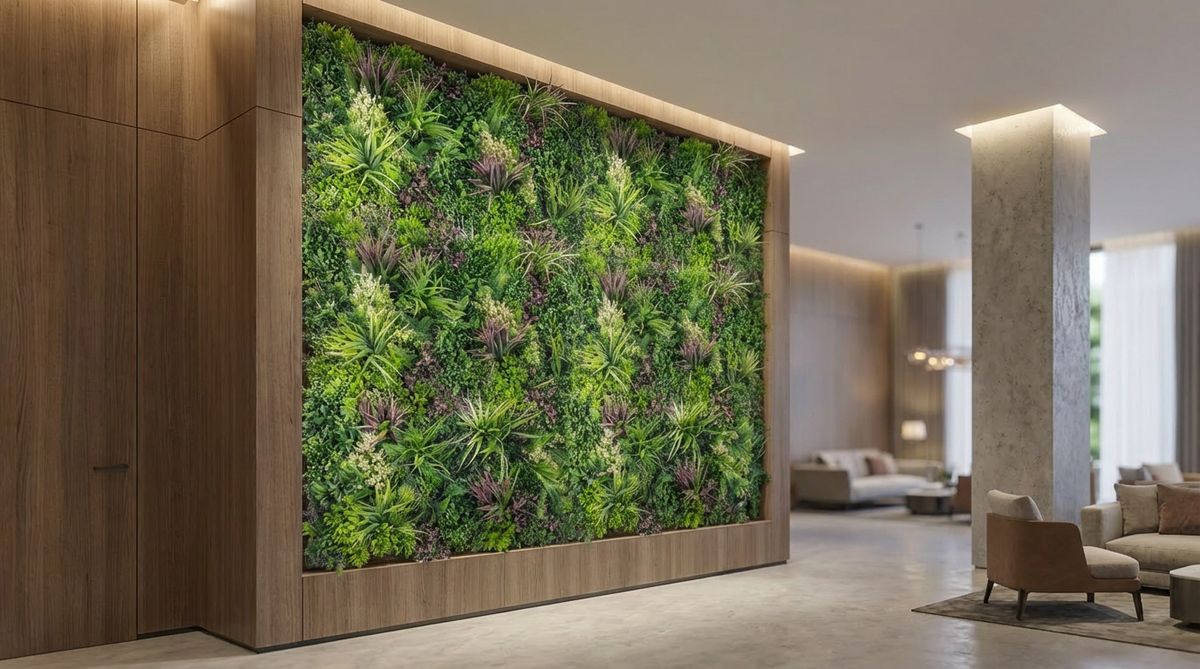
That’s where Artificial living walls and Artificial hedges in Houston come in. When they’re done well, they don’t read as “plastic décor.” They’re modular greenery systems built to hold up to sun, humidity, and high-traffic properties with a lot less maintenance.
Planning a similar project? See residential privacy installs → and the Houston city page.
In this guide, you’ll see what Houston weather does to faux greenery, where these installs make sense (homes, restaurants, multifamily), how to compare providers, and what “fire rated” means in plain language—especially for commercial spaces.
1) The artificial living wall and hedge scene in Houston (and where it’s actually getting installed)
Houston is rough on anything outdoors: strong sun, sudden downpours, long humid stretches, and patios that stay busy most of the year. That mix is why faux greenery shows up in places where owners don’t want to replace plants every other week or where irrigation just isn’t realistic.
In neighborhoods like The Heights and River Oaks, artificial privacy hedges usually land in tight side yards, along pool equipment runs, or on patios where people want screening without tearing up the ground for irrigation. You’ll also see them used to soften modern stucco-and-steel exteriors when someone wants a “living” look but the light is inconsistent.
In EaDo (East Downtown) and around Washington Avenue, you’ll see more faux living wall installs at restaurants and retail. Part of it is the “always green” photo backdrop. Part of it is that high-traffic patios and courtyards beat up real plants fast. If you’ve walked near Buffalo Bayou Park and then grabbed food along Washington, you’ve probably noticed more vertical greenery popping up—some real, plenty artificial—because it reads well from the sidewalk and in pictures.
Commercial property managers also use artificial hedge panels to screen trash enclosures, loading zones, and mechanical areas without pouring a taller wall or reworking hardscape. On multifamily sites near corridors like I-10 and Loop 610, hedges get used to separate dog runs, pool decks, and shared walkways.
There’s a practical reason behind a lot of this: water use and maintenance labor. Houston gets rain, but it doesn’t show up on your schedule. When a property needs to look consistent (leasing photos, brand standards, events), “we’ll catch the next storm” doesn’t cover irrigation gaps, pests, leaf drop, or seasonal die-back.
2) Why Houston property owners keep choosing artificial living walls and artificial hedges
Planning a similar project?
Use these next pages while you read
They cover pricing, service details, and the next planning step without making you leave the article blind.
Most people start looking for an artificial living wall Texas installer for one of three reasons: privacy, consistent appearance, or control.
Privacy that doesn’t turn into a weekly chore
An artificial privacy hedge makes sense when a wood fence feels stark, or when you can’t add fence height because of HOA rules or driveway sightline limits. A 40–60" tall hedge line above an existing fence can change how a yard feels without rebuilding the fence.
In Houston, privacy is often about pool and patio season. Outdoor areas get used early and late in the year, so people want screening that looks the same in February as it does in August.
Consistent green where real plants struggle
Houston’s humidity is no joke. Neither are fungus, pests, or the way some courtyards turn into heat traps between buildings. A real vine wall can look great—until it thins out, scorches on a south-facing wall, or goes patchy where sprinklers don’t hit.
A faux living wall won’t develop bare spots because one drip line is clogged. It also won’t dump leaves into pool skimmers or clog patio drains during those Gulf Coast downpours.
Cleaner solutions for commercial spaces
Restaurants, gyms, and offices like backdrops that stay camera-ready. But commercial landscaping budgets get tightened, and staff turnover can make “daily plant care” hit-or-miss.
Artificial wall systems are predictable. If you’re running a patio in Midtown, you can’t block off a section every week to prune, replant, and sweep up soil. Faux greenery keeps the look without mud, standing water, or irrigation overspray on sidewalks.
Fire-rated options (what that means in real terms)
If you’re specifying Fire rated Artificial Living Walls or Fire rated artificial hedges for a commercial job, ask about documentation right away.
A lot of buyers hear “fire rated” and assume it’s just a marketing phrase. It shouldn’t be. It should mean the product was tested to a specific standard (often ASTM E84 for surface burning characteristics) and the supplier can provide the paperwork.
A simple way to think about it:
- You’re not buying “fireproof” greenery. You’re buying a product that meets a tested classification under a defined method.
- What your inspector accepts can vary. Your AHJ (Authority Having Jurisdiction) is the local official or department that interprets and enforces code for your project.
If you’re doing an interior lobby wall or a covered patio feature, you want a provider who can hand your GC or architect the spec sheet without a scramble.
3) What to look for in a Houston provider (so you don’t end up with shiny panels and curling edges)
Houston is tough on materials. When installs fail here, it’s usually in the same few ways: UV fade, warped backers, obvious seams, or panels that turn into wind sails.
Here’s what’s worth checking before you sign.
Ask what the panels are actually made of
A lot of artificial hedge panels look identical online. In person, the differences show up fast:
- Leaf finish: Some plastics look glossy in direct sun. In Houston light, that shine reads fake immediately.
- Color variation: Better panels blend multiple greens (sometimes with subtle dry tips) so it doesn’t look like a flat carpet.
- Backing rigidity: A flimsy grid backing can sag over time, especially on wide spans.
If you’re comparing an artificial boxwood hedge Texas style, ask to see a sample outside—not just under showroom lighting.
UV strategy matters more than people think
Houston gets long stretches of hard sun, especially on west-facing walls. Ask how the product handles UV and what the warranty really covers (fading and total failure aren’t the same claim).
Also ask about the exact spot:
- South and west exposures are the hardest.
- Covered patios can trap heat and still fade materials.
- Pool decks add chlorine exposure and reflected light.
A Houston installer should be able to talk through your site instead of giving a one-size-fits-all answer.
How they plan to hide seams
Seams are the giveaway. Ask:
- How panel joints will be laid out (brick pattern vs. straight grid)
- Whether they’ll overlap or add extra stems to blur transitions
- How corners and edges will be finished so you don’t see the backing
If the wall will live in a photo-heavy spot (like a step-and-repeat area near the bar), have them point out where seams will land at eye level.
Mounting method: wall type and wind loads
Houston storms aren’t hypothetical. Even away from the coast, straight-line winds and heavy rain punish weak fastening.
A good installer will ask what they’re mounting to:
- Brick
- Stucco
- Concrete
- Steel framing
- Wood fencing
They should also talk about drainage and airflow so water doesn’t get trapped behind the panels. Moisture that can’t drain or dry can stain walls or corrode hardware.
Fire-rated documentation for commercial projects
If you need commercial living wall Texas specs or a fire-rated install for a public-facing space, ask for:
- The test standard (commonly ASTM E84)
- The classification (often referred to as Class A, B, or C)
- A data sheet you can submit to your GC, architect, or inspector
And yes—final approval still sits with your local AHJ. A provider should say that clearly.
4) Houston-specific considerations that change the outcome
Put the same product in Phoenix and Houston and you can get totally different results. Houston needs its own approach.
Humidity + heat = adhesive and fastener reality
Humidity plus heat cycling can make some adhesives soften or fail sooner outdoors. That’s why mechanical fastening and proper backing matter.
If someone proposes an outdoor install that relies mostly on adhesive (especially on textured masonry), ask what it looks like after a summer of 95°F days and warm nights.
Stormwater and staining on exterior walls
When panels sit tight to an exterior wall with no airflow, moisture can hang around after storms. Over time, you can end up with:
- Water lines on masonry
- Mildew on shaded sides
- Corrosion on cheap hardware
The fix is usually spacing, drainage planning, and better fasteners—not a miracle coating.
Sun angles and “the glossy leaf problem”
Houston sun can turn glossy faux leaves into little mirrors, especially on west-facing walls in late afternoon. If the wall is near seating, that glare gets annoying fast.
This is the kind of detail you only catch by taking a sample outside at the actual install location.
Where fire-rated greenery tends to come up in Houston
Houston isn’t a wildfire market like parts of California, but fire-rated requirements still show up in:
- Interior features in lobbies
- Corridors and amenity spaces in multifamily
- Restaurant interiors and covered patios
- Temporary event builds that still need venue approval
If you’re near high-traffic zones—around The Galleria, for example—clean documentation can speed things up when a new tenant is trying to open on a deadline.
A quick note on local rules
Fire ratings and code acceptance can vary by project type and jurisdiction. Confirm requirements with the local AHJ (Authority Having Jurisdiction) tied to your permit/inspection path. And if insurance is part of the decision, check with your carrier—coverage comes down to the policy.
5) Getting started with artificial living walls and hedges in Houston (a practical path)
These installs go a lot smoother when you pick a few basics up front.
Start by defining the job. Are you blocking a view, building a branded feature wall, or cutting maintenance? Privacy installs usually need thicker panels and a clean top edge. Feature walls need tighter seam work and cleaner edge finishing because people stand close.
Then measure like you mean it. Height and width are obvious, but don’t miss obstructions: hose bibs, light fixtures, vents, irrigation lines, and gate swings. In a narrow Heights side yard, gate clearance can decide the entire layout.
Next, figure out whether you need a fire-rated product. For commercial spaces, ask for the paperwork early so it doesn’t turn into a last-week sprint before inspection.
Finally, schedule a site visit with Lone Star Faux Scapes so the installer can look at sun exposure, mounting surfaces, and drainage. Houston sites vary too much for “close enough” pricing based on photos.
Conclusion: a Houston-friendly way to get the green look without the upkeep
If real plants keep thinning out, or your patio privacy still feels unfinished, artificial greenery can be a straightforward fix—especially when it’s installed with Houston sun, storms, and humidity in mind.
If you’re looking for Artificial living walls and Artificial hedges Houston TX for a home, restaurant, or commercial property, Lone Star Faux Scapes can visit the site, bring real samples, and talk through panel type, mounting method, and fire-rated documentation if you need it. Start with a site assessment so you know what’ll work before you commit.
FAQ
How long do artificial living walls last outdoors in Houston? It depends on sun exposure, product quality, and where it’s installed (full sun vs. covered patio). Ask about UV resistance and what the warranty covers for fading.
Do artificial hedge panels work for fence-top privacy? Yes, as long as the fence and posts can handle the extra surface area in wind. A good installer will explain fastening and support so panels don’t flap or pull loose.
What does “fire rated” mean for artificial living walls? Usually it means the product was tested to a standard like ASTM E84 and comes with documentation showing a classification (often referenced as Class A/B/C). Final acceptance depends on your AHJ.
Will an artificial wall trap moisture and cause mold? It can if it’s installed flush with no airflow on a surface that stays damp. Spacing, drainage planning, and hardware choice matter, especially in humid Houston.
Can you install faux living walls on brick or stucco? Yes, but the mounting method matters. Expect mechanical fasteners suited to the wall type, plus a plan to keep water from sitting behind the panels.
Need a next step?
Planning a similar Texas project?
Use this article for research, then send your dimensions, city, and photos if you want a useful next step.
Ready for the next step?
Use the page that fits your project best
Pick the shortest path based on whether you need pricing, a service page, or a local planning page.