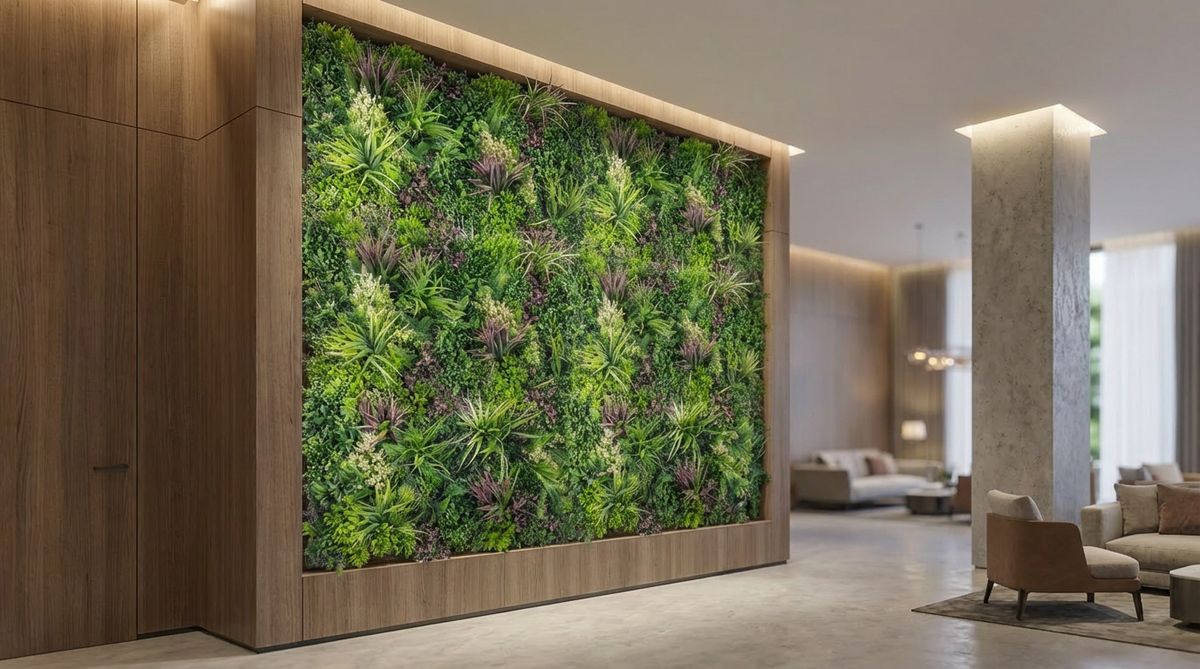
In Dallas, it’s easy to get stuck in the same loop: you plant for privacy in spring, you’re battling heat by June, and by late summer you’re looking at scorched leaves and thin patches. If you’ve been searching for Artificial living walls and Artificial hedges Dallas TX, you’re probably trying to solve one of two things—privacy that looks the same all year, or a clean “green” look that doesn’t come with a sprinkler calendar.
This guide covers what actually matters for a faux living wall and artificial hedge panels in Dallas: where people put them, which materials hold up in Texas sun, what “fire rated” means in plain English, and how to size up an installer. It also gets into Dallas-specific stuff like wind, UV, and how our long summers change what “maintenance” really looks like.
Planning a similar project? See artificial living wall installs → and the Dallas city page.
What the artificial living wall and hedge scene looks like around Dallas
Dallas has a mix of day-to-day reasons people end up with artificial greenery. In neighborhoods like Uptown and Knox/Henderson, outdoor space is usually tight—small patios, courtyards, roof decks, and narrow side yards. A living wall sounds great until you start adding up irrigation, drainage, lighting, and plant replacement. That’s where a faux living wall turns into the “looks finished without the hassle” choice for spots where real plants struggle.
Over in Lakewood, the motivation is often different: established homes, mature trees, and backyards that actually get used. People want a privacy screen by a pool, hot tub, or patio kitchen, but they don’t want to be out there trimming every few weeks. Artificial boxwood and mixed-leaf hedge panels show up a lot because you get full coverage right away.
Commercial jobs are a big chunk of the Dallas demand too. Along stretches like McKinney Ave and near places like Klyde Warren Park, restaurants and retailers use greenery walls to soften brick, concrete, and metal without babysitting plants in shaded breezeways or full afternoon sun. Property managers like artificial hedge panels because it’s a repeatable look across multiple sites, and you’re not scheduling landscaping crews around tenants.
And then there’s the “Dallas weather reality.” Real hedges can work here, but they don’t take care of themselves. Between the heat, the occasional freeze, and water restrictions (when they pop up), “simple greenery” can turn into an ongoing line item. Artificial privacy hedge systems usually show up when the owner wants a predictable result and fewer things that can go sideways.
Why Dallas residents choose artificial living walls and artificial hedges
Planning a similar project?
Use these next pages while you read
They cover pricing, service details, and the next planning step without making you leave the article blind.
Most people don’t start out wanting fake plants. They land there after dealing with the stuff that comes with real yards and patios in Dallas.
First: fast privacy. If you’re trying to block a neighbor’s second-story view, hide trash bins or HVAC, or split up a fence line, a living hedge needs time to fill in. An artificial privacy hedge gives you privacy now. That’s a big deal if you’re hosting, renting out the property, or just over waiting for “next season.”
Second: heat and sun exposure. Dallas sun is rough on real greenery, especially in reflected-heat spots—light-colored walls, pool decks, or narrow side yards that trap heat. A decent artificial system isn’t “zero maintenance,” but it won’t fry in August because you missed a couple watering days.
Third: predictable upkeep. With real hedges, you trim, feed, treat pests, and deal with leaf drop. In North Texas you also get the seasonal mess—pollen, dust, and storm debris. With artificial hedge panels, upkeep is usually rinsing or a gentle wash when it looks dusty, plus a quick check that fasteners stayed tight after windy weather.
Fourth: design control. A faux wall keeps the same pattern and color, which is hard to guarantee with living plants. That’s why you’ll see searches like artificial living wall Texas pick up around remodel season—people are finishing a patio build, updating a pool deck, or cleaning up a commercial frontage and they want something that looks consistent.
Fifth: fire rating requests (mostly commercial). More Dallas clients ask about Fire rated Artificial Living Walls and Fire rated artificial hedges because venues, offices, and multifamily properties may need documentation for finishes inside or near egress paths. This is where you want specifics, not “yeah, it’s safe.” For many products, you’re looking for an ASTM E84 test result (often listed as Class A, B, or C). That doesn’t make the product non-combustible, but it does give you a standardized way to compare flame spread and smoke development.
What to look for in a Dallas provider (so the wall doesn’t look rough in 18 months)
Dallas is hard on anything that lives outside. If you want an artificial hedge or living wall to keep its color and shape, the materials matter, and the install matters just as much. Here’s what to ask before you sign.
Start with the panel and leaf material (not the photo)
Photos can hide plenty. Ask what the leaves are made from (often PE or PVC blends) and whether the product is built for UV resistance. In Dallas, UV is the slow burn that leads to fading and brittle leaves over time, especially on south- and west-facing walls.
If you’re comparing an artificial boxwood hedge Texas style panel to a mixed foliage panel, pay attention to leaf thickness, how stiff the backing is, and how the leaves are attached. Cheap panels tend to shed or curl at the edges after enough heat cycles.
Don’t skip the backing and attachment method
A living wall can act like a sail in a wind event if it’s mounted poorly. Dallas thunderstorms and straight-line winds put real stress on fasteners.
A provider should be able to explain:
- What the panels mount to (wood framing, metal framing, masonry, existing fence)
- The fastener type (exterior-rated screws, anchors for masonry, washers where needed)
- How seams are handled so you don’t end up with obvious grid lines
If the answer is “we just zip-tie it,” pause. Zip ties can be part of an install, but they shouldn’t be the whole strategy for a larger exterior wall.
Ask how they handle corners, caps, and edges
Edges are where artificial installs start looking fake. A solid installer takes time on returns (wrapping corners), hiding the backing, and making clean terminations along stucco, brick, or fence pickets.
If you’re doing an artificial hedge panels run along a fence, ask how they’ll keep the top edge from looking like a straight cut line. Sometimes it’s a trim detail. Sometimes it’s layering panels or using a denser top row.
Fire-rated documentation: get the paperwork, not a promise
For commercial or multifamily projects—especially a commercial living wall Texas use case—ask for documentation that matches the exact product being installed. Fire performance depends on the specific materials.
What you want in plain terms:
- The test standard (commonly ASTM E84)
- The result classification (often Class A/B/C if tested)
- A spec sheet that clearly matches the exact product line
Fire code requirements depend on the AHJ (Authority Having Jurisdiction), meaning the local building or fire authority that interprets and enforces code. In Dallas, the AHJ might ask for documentation during plan review or at inspection, depending on where and how the wall is installed.
Warranty language that matches Dallas reality
If the warranty reads like it’s meant for indoor décor, it won’t help much outdoors. Ask what’s actually covered for exterior installs: fading, brittleness, panel failure, and attachment issues.
And ask who handles it—manufacturer only, or the installer as well.
Dallas-specific details that change the install
Dallas isn’t coastal-humid like Houston, and it isn’t desert-dry like West Texas. It’s its own mix. A few local factors change how artificial greenery should be planned.
Heat, UV, and wall orientation
A west-facing wall by a paved patio takes a beating. Surface temps climb, and that speeds up aging in plastics. If you’re mounting a faux wall on a fence that gets afternoon sun, ask about UV-stabilized materials and whether the color looks flat or has some natural variation.
If the wall is near a grill or an outdoor kitchen, talk through spacing and heat exposure. Artificial greenery and open flame don’t play well together. That’s not Dallas-specific, but it comes up a lot here because outdoor kitchens are common.
Wind and storm planning
Dallas thunderstorms don’t give much warning. A long run of hedge panels needs real attachment points and consistent support so it doesn’t flap, rattle, or work loose over time.
If you’re near open corridors—like a property that catches wind across an alley or open lot—your installer should be talking about mechanical fastening patterns and backing support. You don’t want the first big storm turning into a repair bill.
Dust, pollen, and “why does it look dull?”
North Texas pollen seasons are no joke, and construction dust gets everywhere. Artificial greenery can look tired when it’s just dirty. The fix is usually simple: a gentle rinse, or low-pressure washing from the right distance so you don’t tear leaves or loosen the panel.
If you’re near busy roads like US-75 (Central Expressway), dust buildup is usually more noticeable. Plan on periodic cleaning if the wall faces the road.
Winter freezes and expansion/contraction
Dallas doesn’t freeze like the Midwest, but we do get cold snaps. Materials expand and contract, and that can show up as seam lines when panels were installed too tight with no room to move. Small detail. But it’s the difference between a wall that stays clean-looking and one that starts to gap.
A quick note on compliance
Fire ratings and code requirements depend on where the wall is installed (interior vs exterior, distance to exits, occupancy type). Confirm requirements with your AHJ. Any installer telling you “it’s guaranteed to pass” is guessing.
Getting started with artificial living walls and artificial hedges in Dallas
Projects tend to go better when you decide a few things early.
First, get clear on what you’re solving: privacy, appearance, hiding an ugly surface, or making a commercial area easier to keep clean. That choice points you toward the right product. A dense artificial boxwood hedge Texas style is great for privacy. A mixed-foliage faux living wall looks more like a design element.
Second, measure the area and note the conditions. How much direct sun does it get? Is it near sprinklers? Is it going on brick, stucco, a wood fence, or metal framing? A good installer will ask all of this anyway, but you’ll get cleaner quotes and fewer surprises if you bring it up first.
Third, if fire rating matters, say it in the first call. For a commercial living wall Texas project, it’s common to need submittals for the GC or property manager. It’s easier to choose a Fire rated Artificial Living Walls product up front than to swap after the fact.
If you want a local team that installs artificial living wall Texas and artificial hedge panels in Dallas, Lone Star Faux Scapes can walk you through product options, mounting methods, and the documentation side when fire ratings are part of the scope.
Wrap-up: a Dallas wall that stays green without the Dallas upkeep
Artificial living walls and artificial hedges aren’t for everyone. But in Dallas—where heat, sun, and busy schedules stack up—they solve a pretty specific set of problems: steady privacy, a consistent look, and less routine maintenance than living plants.
If you’re in Uptown, Lakewood, Knox/Henderson, or nearby and you’re deciding between a faux living wall and hedge panels, the next step is straightforward: get a site-specific plan for materials, attachment, and (when needed) fire-rating documentation that matches the exact product being installed. That’s how you end up with a wall that still looks like you meant it to, even after a couple of Dallas summers.
Visit our Dallas artificial hedges and living walls page for project photos and pricing details. We also serve Houston, San Antonio, and Sugar Land.
Need a next step?
Need fire-rated options or documentation?
Send the wall size, project type, and timeline. We can tell you when fire-rated foliage or documentation belongs in the scope.
Ready for the next step?
Use the page that fits your project best
Pick the shortest path based on whether you need pricing, a service page, or a local planning page.